
Knoydart: We travel to Scotland’s last wilderness by boot and by boat
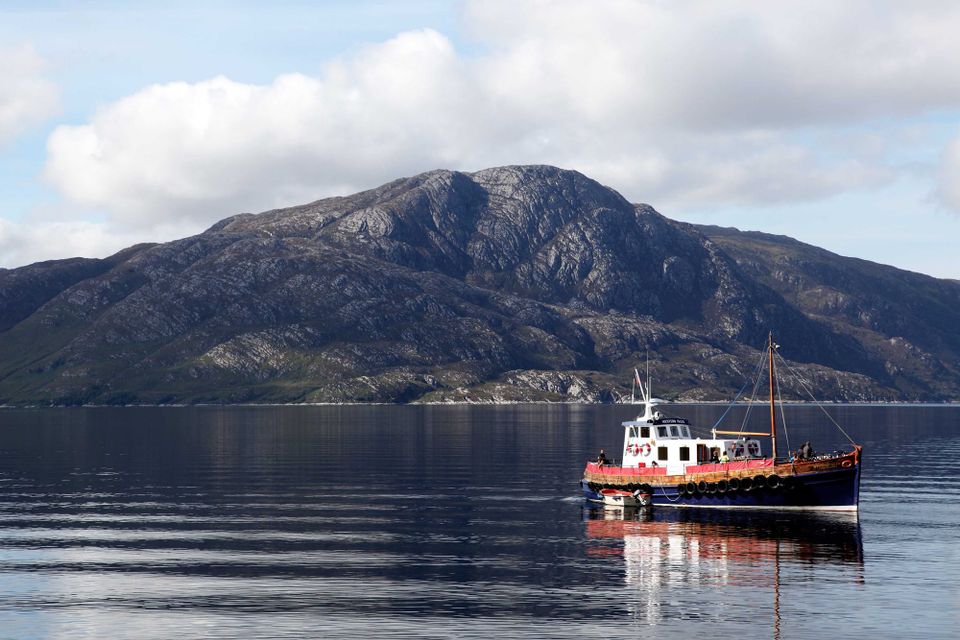
YOU can march for miles through bog, forest and mountain passes to reach Knoydart’s jagged peaks, or you can step aboard a ferry in Mallaig and be sipping a locally brewed pint at The Old Forge within the hour.
Either way, Scotland’s remotest peninsula offers something few other places can. The unspoiled landscapes, wildlife, and the sense you’ve truly left the modern world behind provides a rare respite.
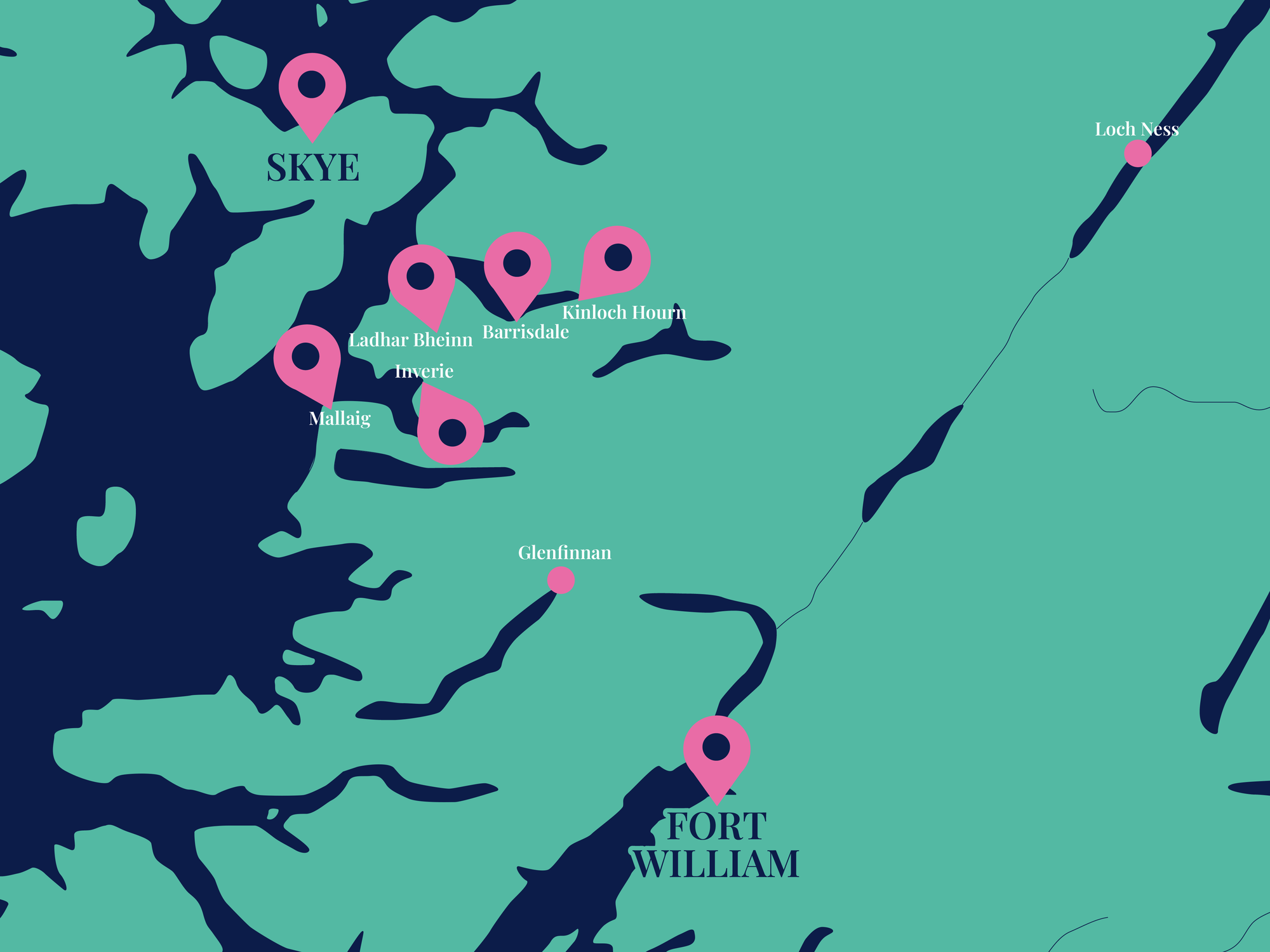
Knoydart can only be reached by boat or arduous stravaigs along Loch Nevis in the south and Loch Hourn in the north.
Nevis translates from Gaelic as “Heaven” and Hourn as “Hell”. Knoydart is sandwiched between the two and it’s a metaphor that’s all too easy to abuse.
The views are sensational, like visiting a kind of paradise, but the long distances, the midgies and the weather can all feel like a feature of the other place.
John goes into the wilderness
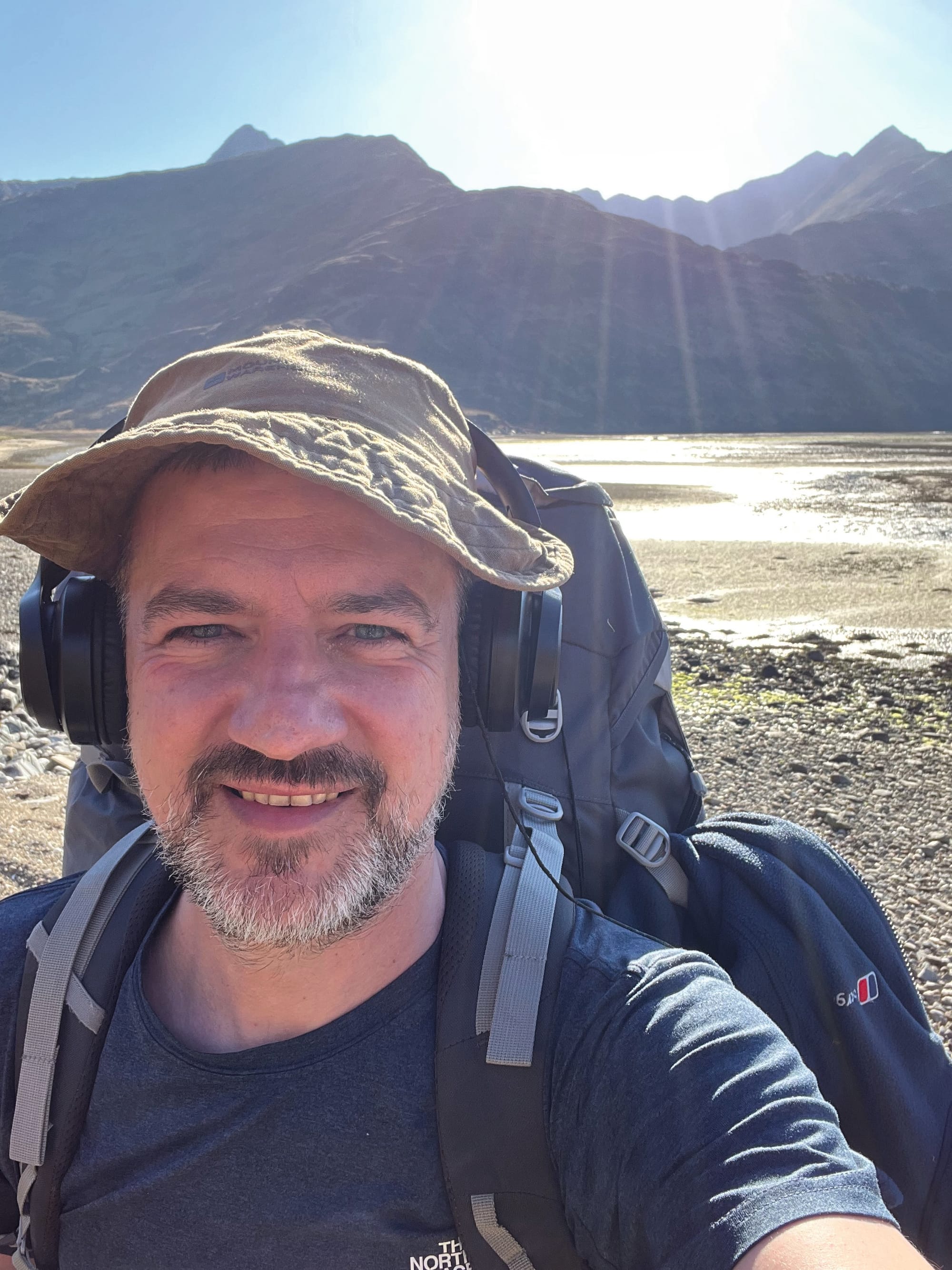
I had decided to fulfil a lifelong dream of climbing Ladhar Bheinn, a Knoydart mountain with one of the furthest and most challenging walk-ins in Scotland, but what a route it is.
Even the drive to the starting point at Kinloch Hourn is a challenge – it's a contender for both the best and the worst road in the country.
A gruelling drive sets the tone
Sure, there are spectacular lochs, grand vistas and towering mountains, but after a pleasant section it soon descends into Hell (remember what Hourn means).
The craterous road surface along and particularly after Loch Cuaich is appalling and winds alarmingly up, down and all around.
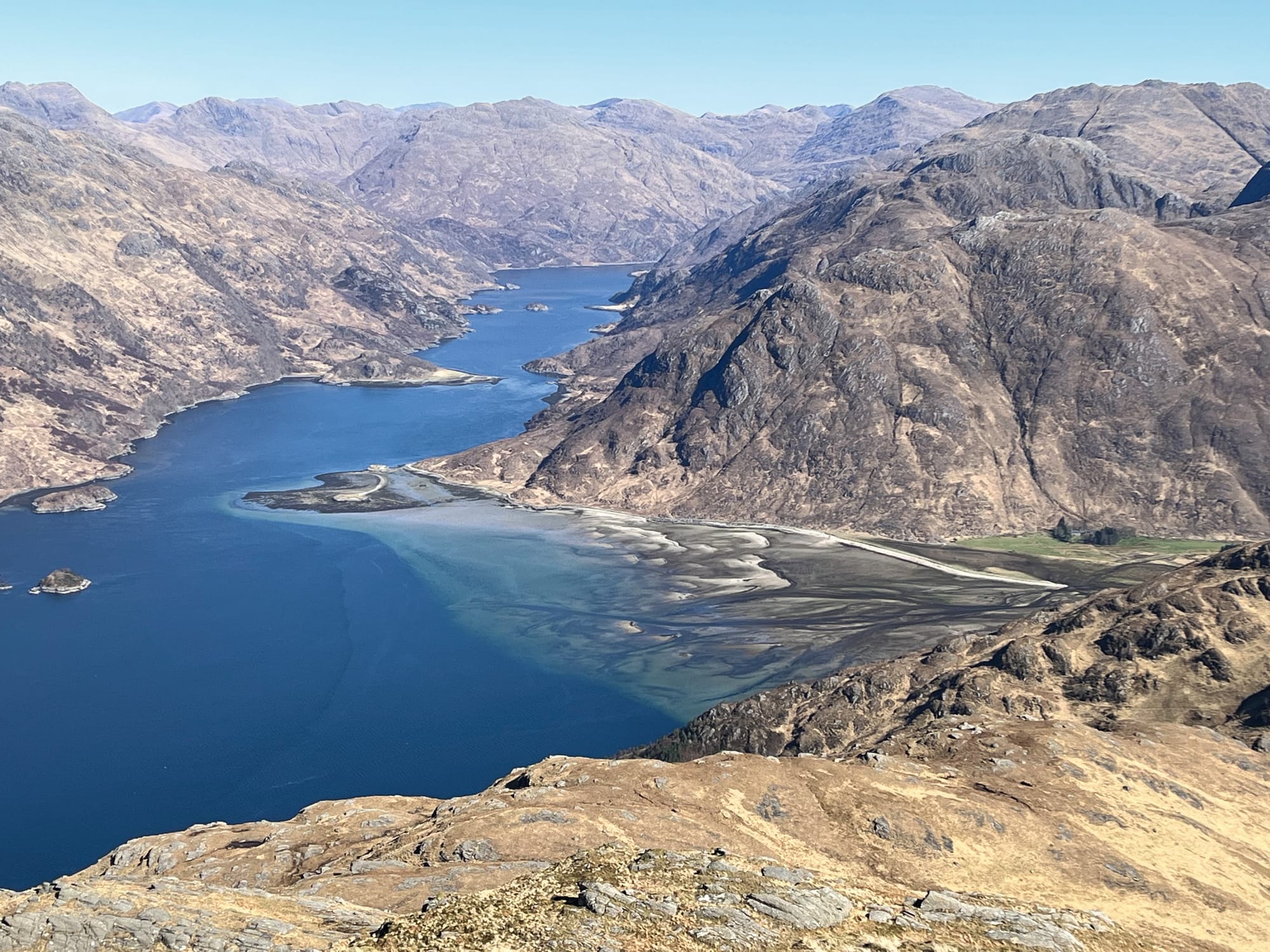
The final descent into Kinloch Hourn would challenge Indiana Jones as it plunges steeply and quickly down a rocky gorge to sea level. Awesome and awful.
Suddenly, however, you arrive amid the grandeur of the glen where a narrow finger of the sea beckons the walker on from the small village.
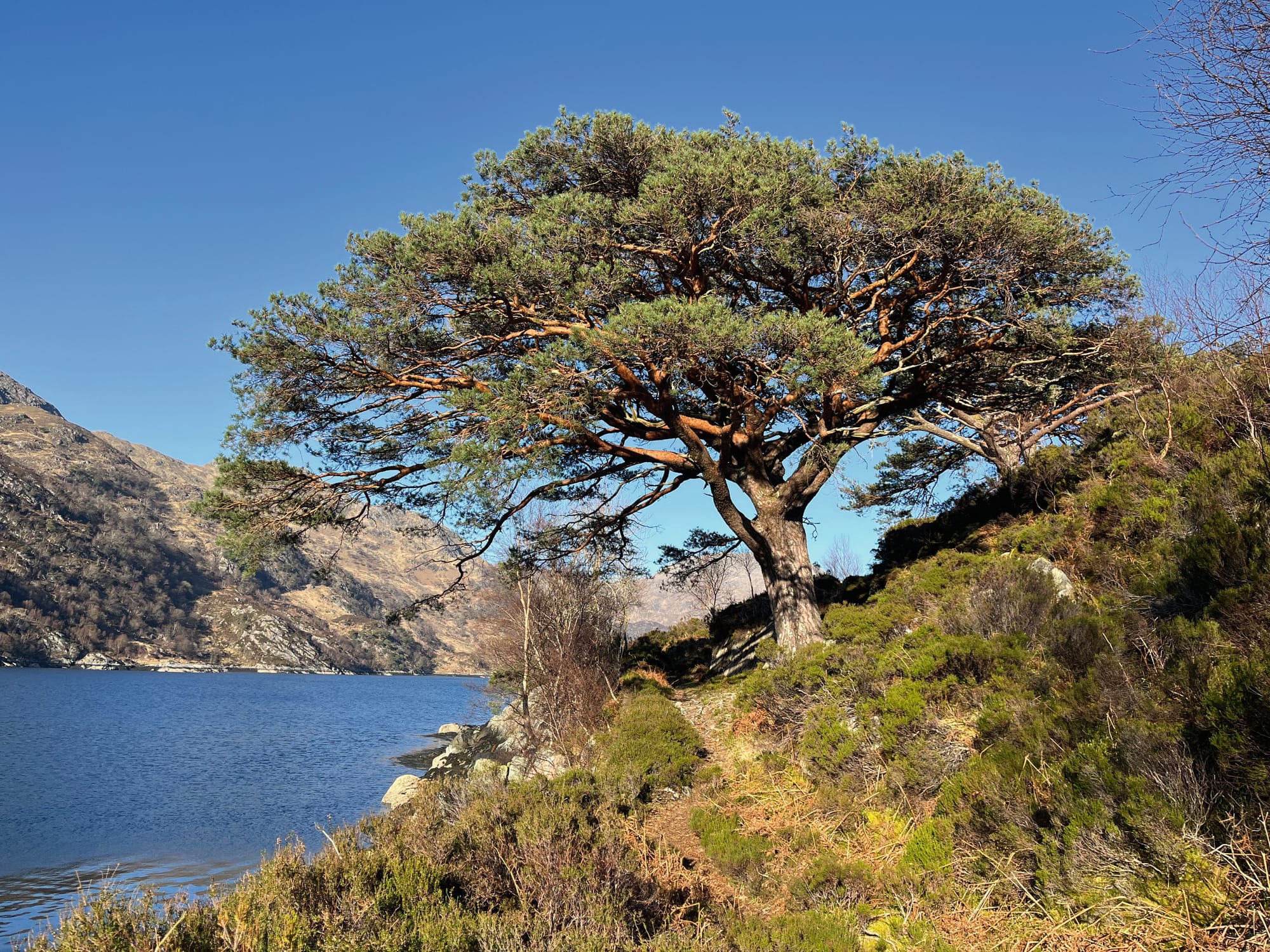
This is the beginning of the walk-in along the south shore of Loch Hourn. It hugs the coastline tightly and at times the sea washes over it.
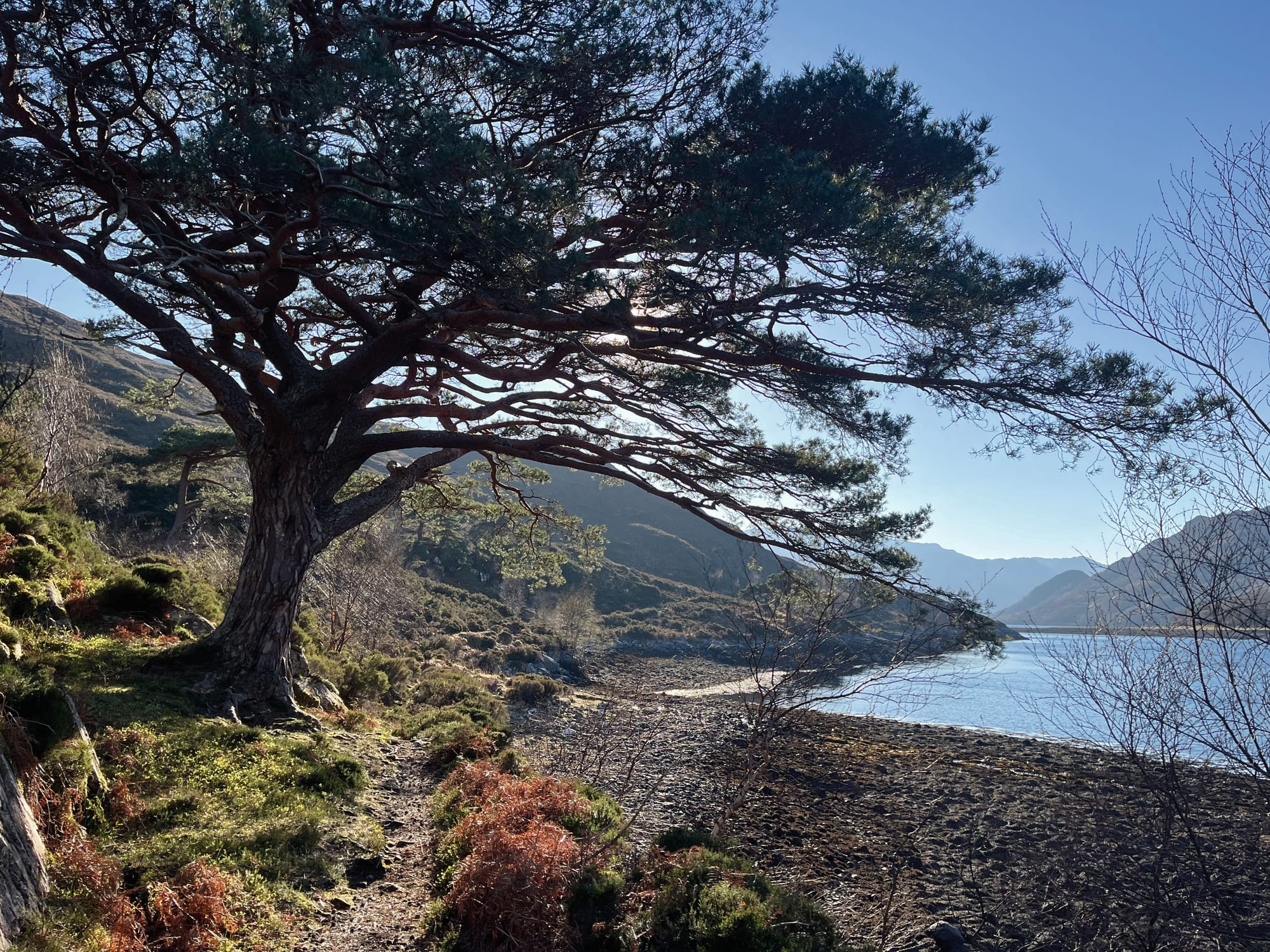
At others it climbs above majestic headlands, high cliffs and meanders through glorious Caledonian pine forests.
There are three taxing climbs to 100m with descents to sea level. Boggy sections are gruelling after even the average heavy rain fall.
Ladhar Bheinn Facts
Height: 1,020 metres (3,346 ft) – it’s a Munro.
Location: Western Knoydart, Lochaber, Highland.
Name meaning: From Gaelic, often translated as “hoofed mountain” or “hill of the hoof.”
Wildlife: Red deer, golden eagles, and otters.
Reputation: Often described as one of the finest west coast Munros.
Despite carrying weighty camping gear, the rewards of the vistas, sounds of the many burns and the clear, fresh air more than make up for it.
First glimpse of the jagged peak
It is rare to experience Caledonian forest right down to the sea shore, and you can see how this area looked in days of auld.
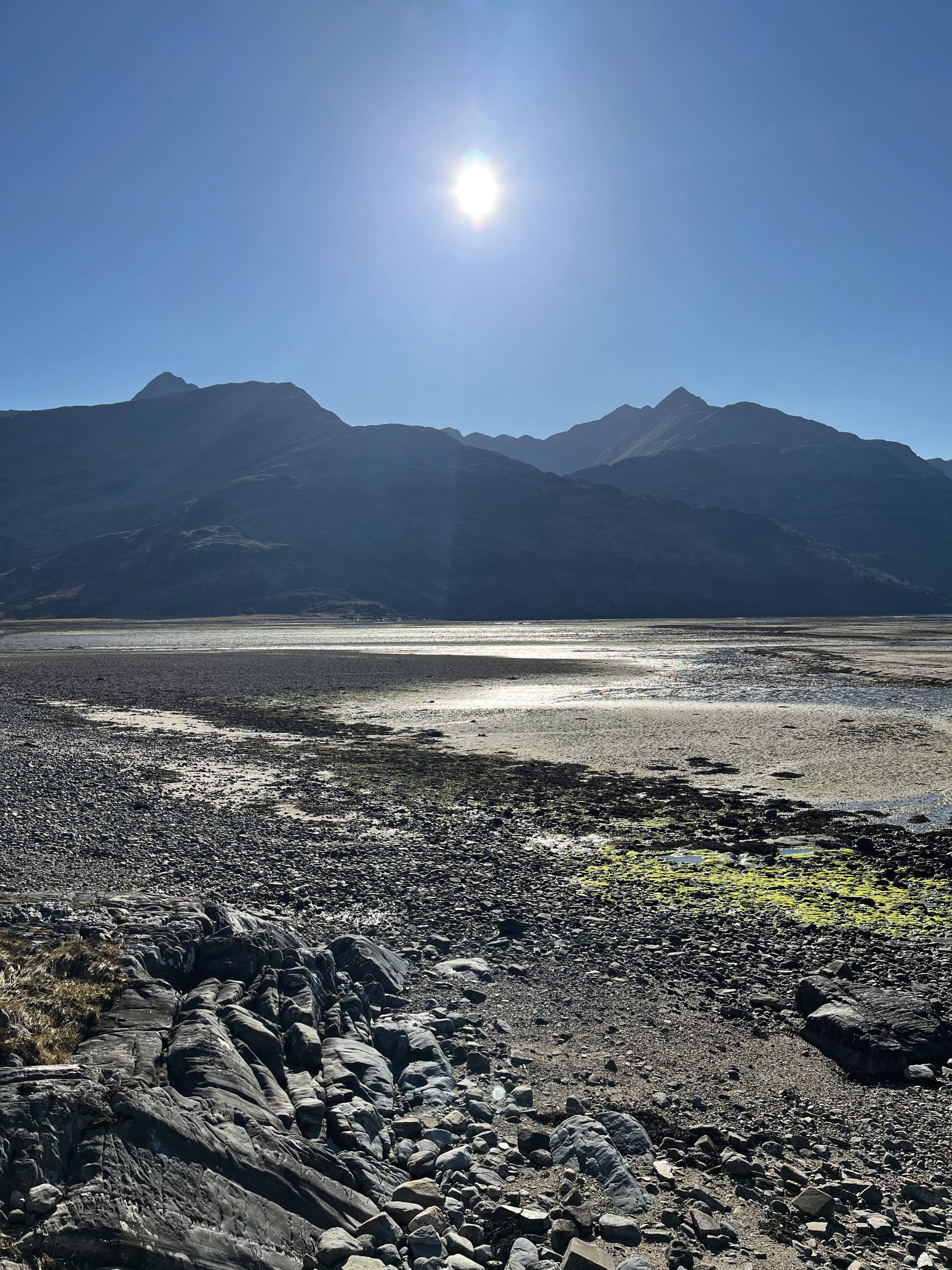
Ladhar Bheinn first appears here, throwing a ridge of jagged teeth above the horizon.
After about five tough miles the path relents then dips down into Barrisdale Bay where a grand vista of sea loch and mountains opens up.
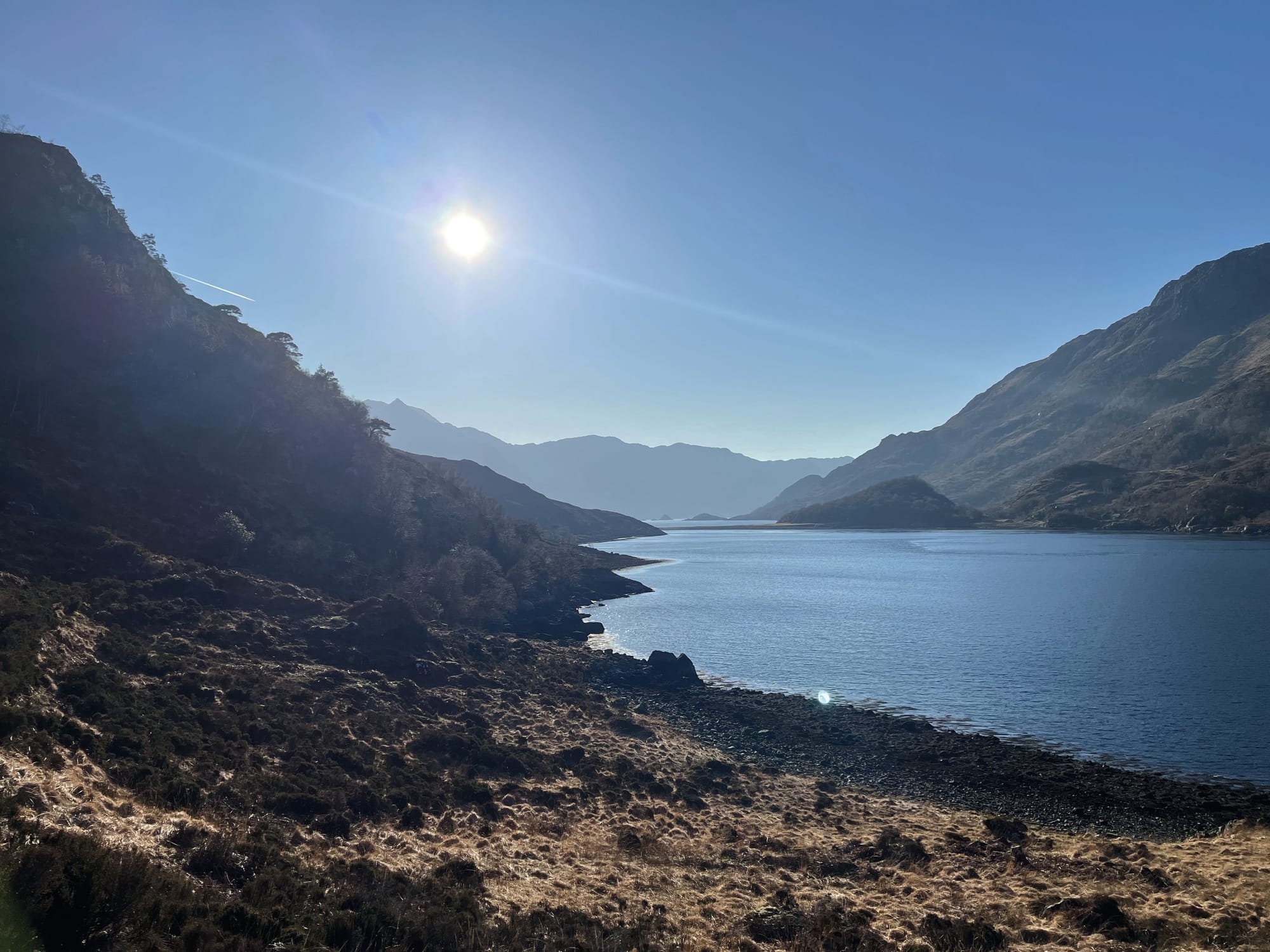
The eye is drawn to an abandoned croft which waits mournfully by the shore in a testimony to the Highlanders who used to live here.
The first stage of the walk ended here for me at a bothy provided by the estate. I camped outside but it would be possible to stay in it.
Friendly deer and wild winds
The bothy gets busy in summer so bring a tent just in case.
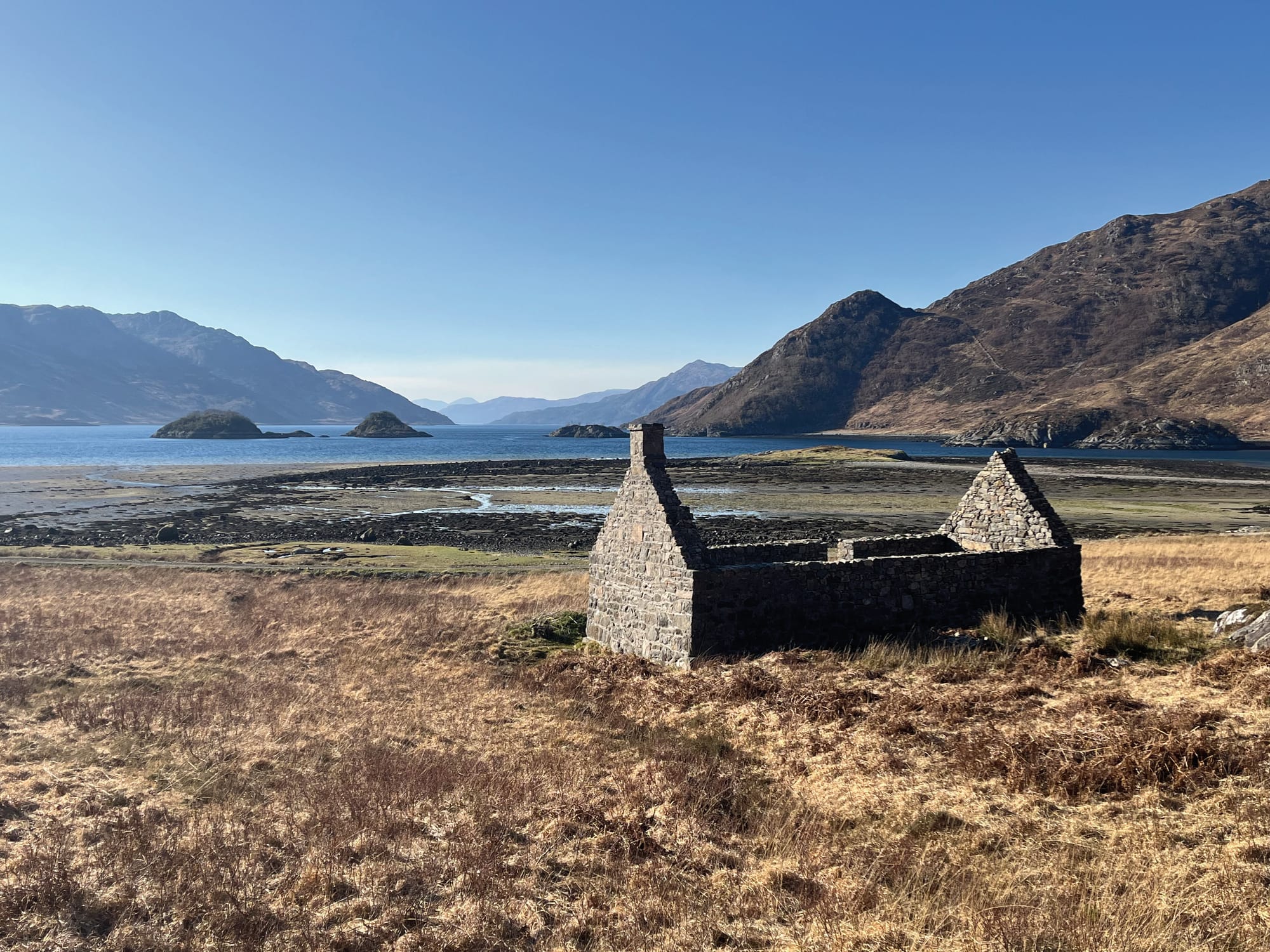
My night here was fairly pleasant, although the tame stag who decided to sleep a metre away from the tent was a little unsettling.
But there was no way I could ignore the truly wild wind which arrived from nowhere during the night.
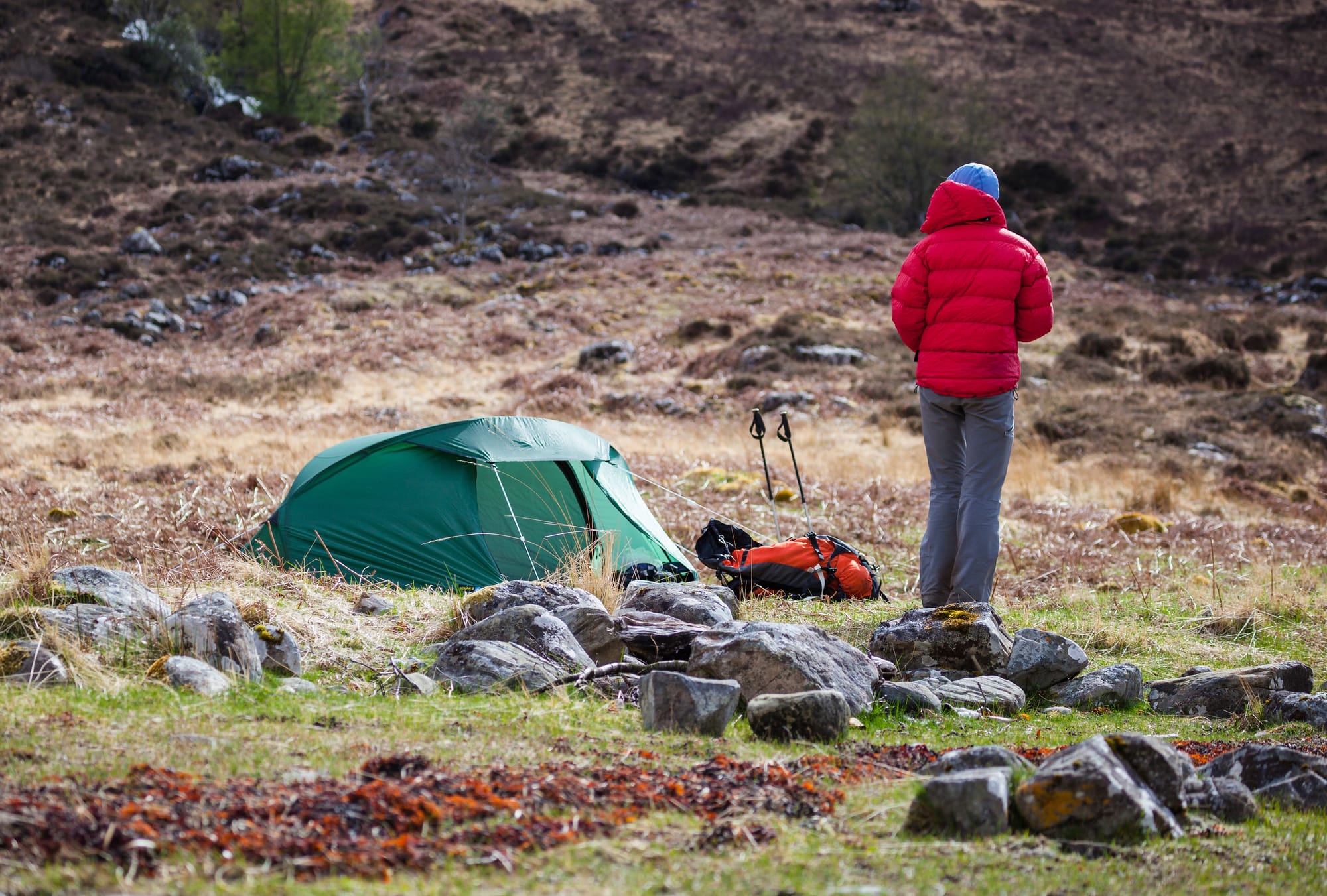
Gusts came barrelling like freight trains through the distant Mam Barrisdale pass high above, then they would hit the tent with terrifying force. Somehow I got to sleep.
The next morning I awoke to a sight so splendid that any despair was lulled. The rising sun painted the high mountains in shades of gold while the deep blue sky stretched off into infinity.
After a quick bowl of porridge, I crossed the tranquil River Barrisdale in an unforgettable amphitheatre of grand mountains and deep glens before heading up into Mam Barrisdale and on to Ladhar Bheinn.
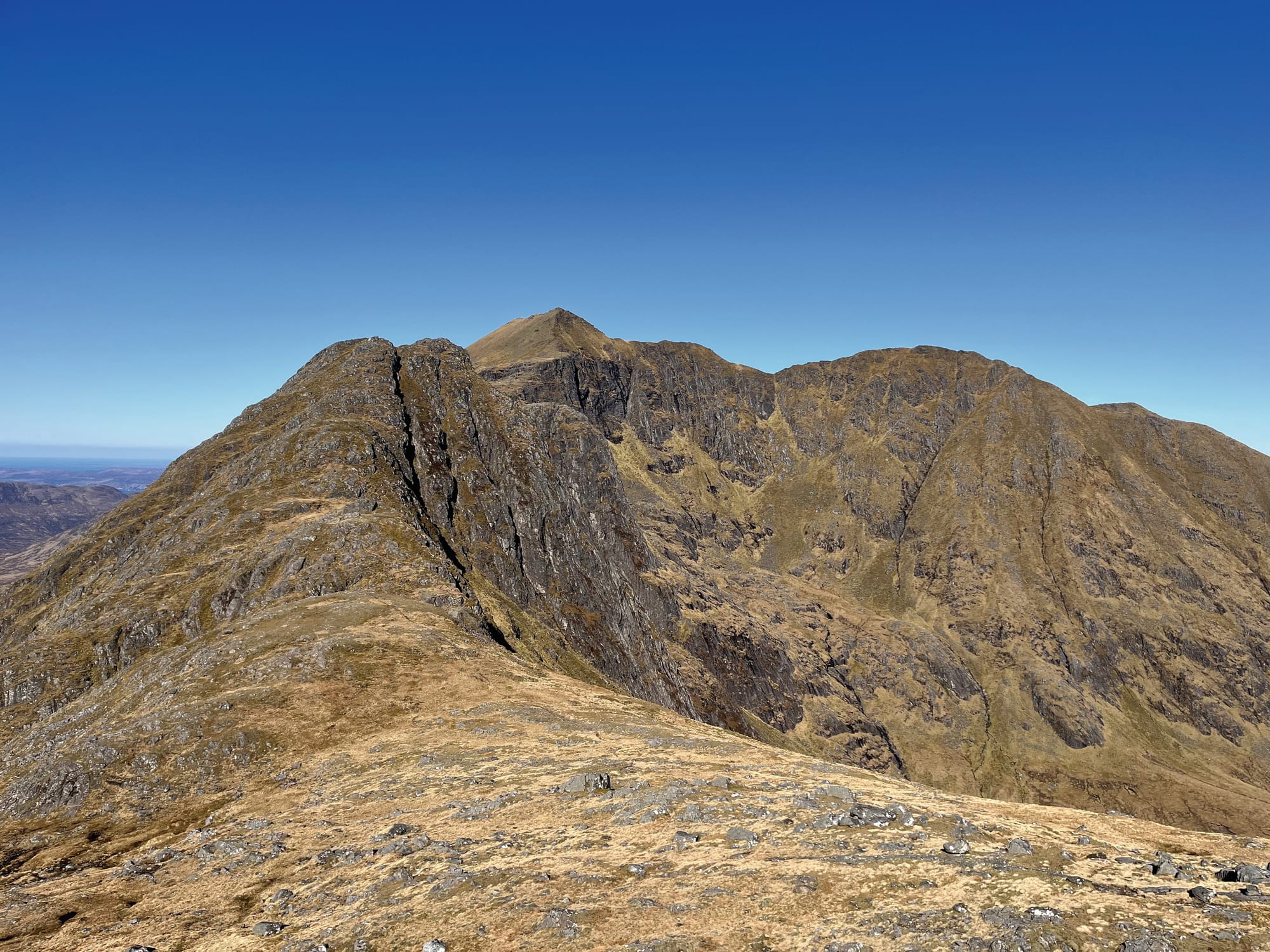
The walk up into the high pass of Mam Barrisdale was very enjoyable, with great views down the deep, distant glens, while anticipation of the views to come hauled me up to the top of the pass very quickly.
Great views come with a challenge
Navigation is a little tricky here as you look for the path up on to the ridge of Stob na Muicraidh to the west of the pass.
The lie of the land should however pull everyone to a point just under the dramatic peak of Stob A’ Chearcaill.
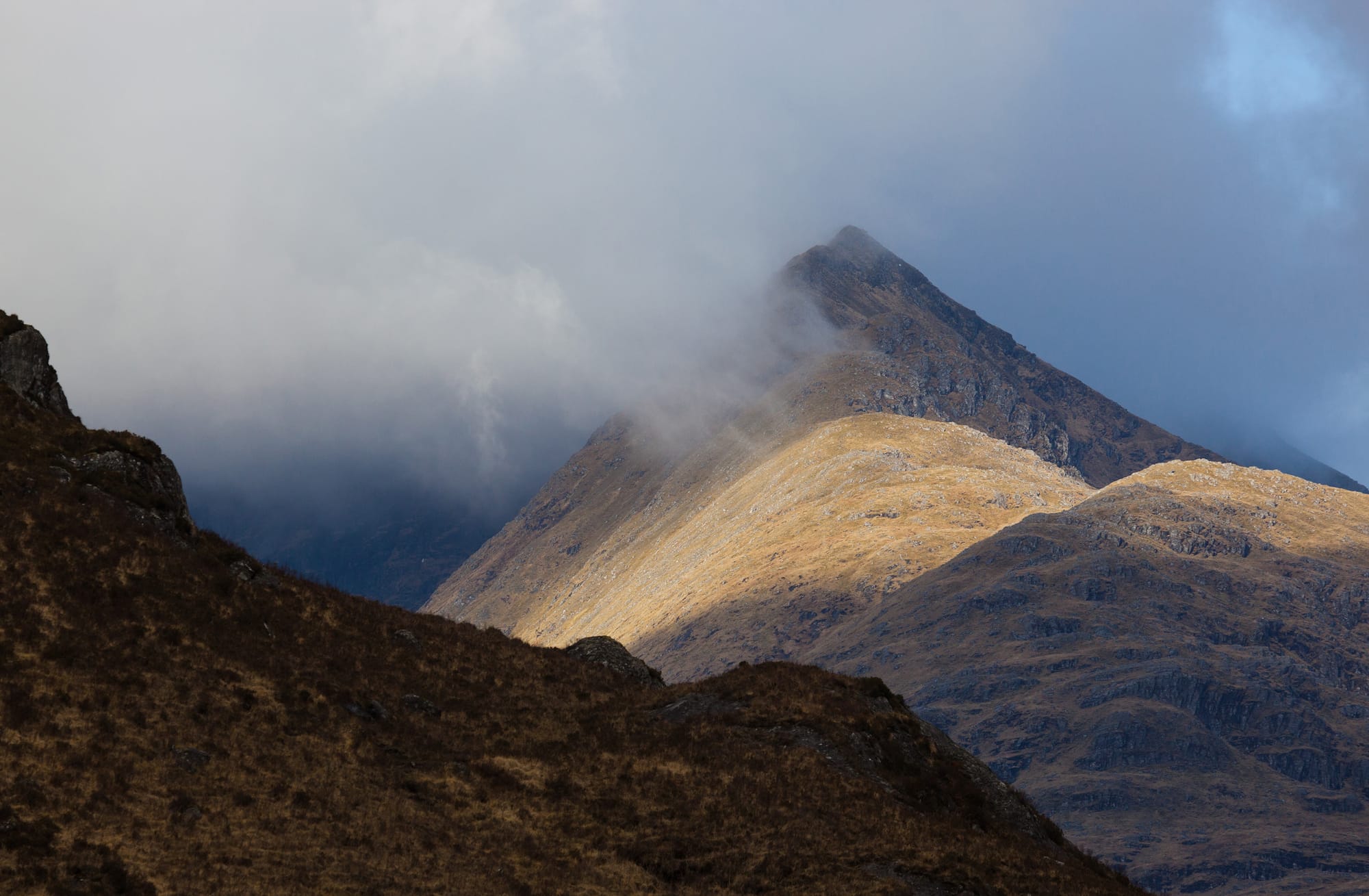
At this point I thought, "How the hell do I get up that?" A band of sloping rocks girdle the bottom of the very steep sided peak.
It seemed impassable, but a closer look revealed a path picking through the rock before becoming more obvious towards the subsidiary peak of Aonach Sgoilte.
The climb begins
During the advance towards this summit the view really started to reveal its true magnificence.
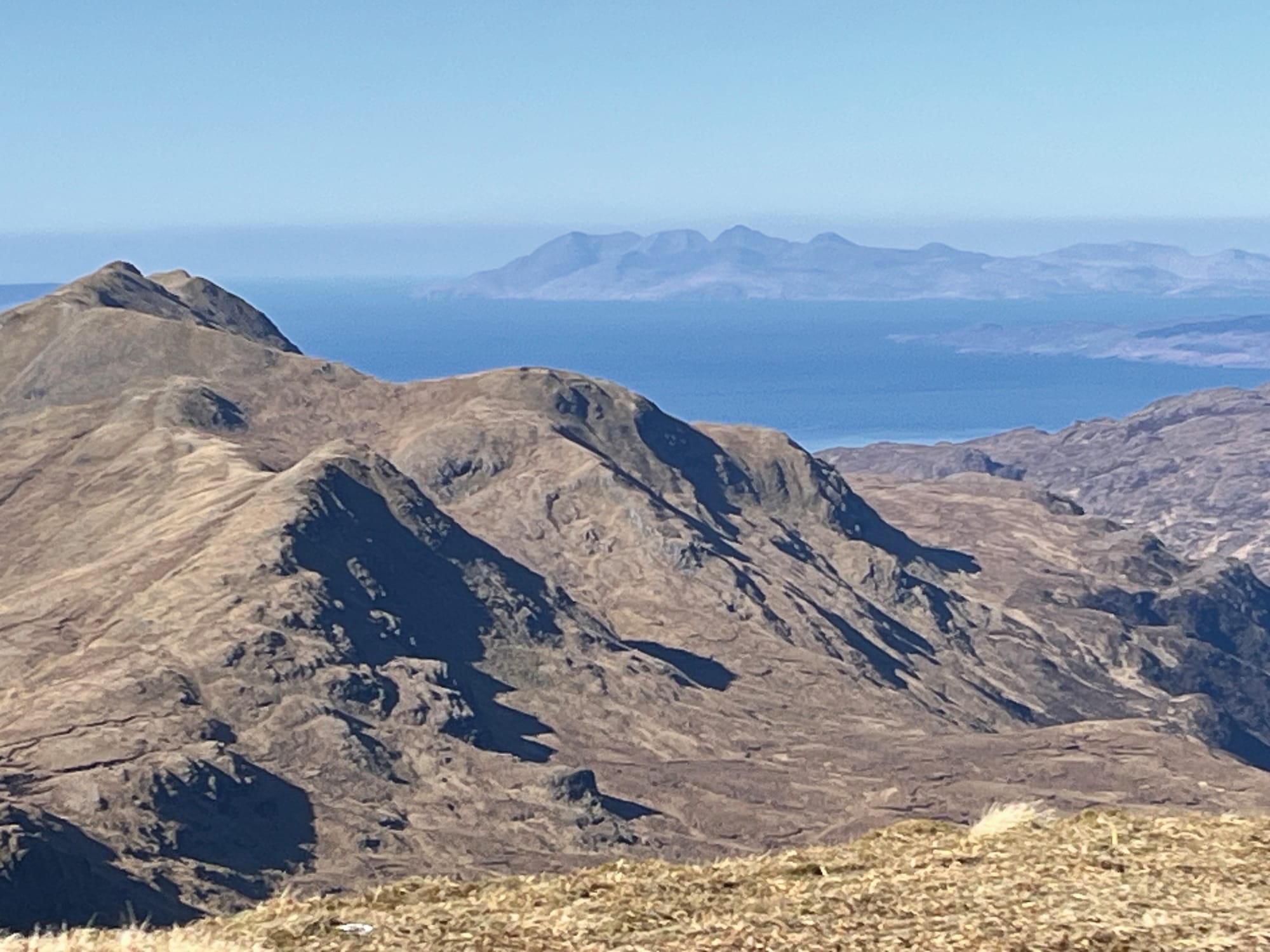
The neighbouring Munros of Meall Bhuide and Lunnie Bheinn rose dramatically to the east above complex rock formations, while the first glimpse of the sea glittered to the west.
The peak is in sight
Ladhar Bheinn itself towered majestically ahead, and there were a few sharp descents and ascents with a little scrambling before I finally reached its summit.
And what a summit. It’s impossible not to stop and just stare (weather permitting).
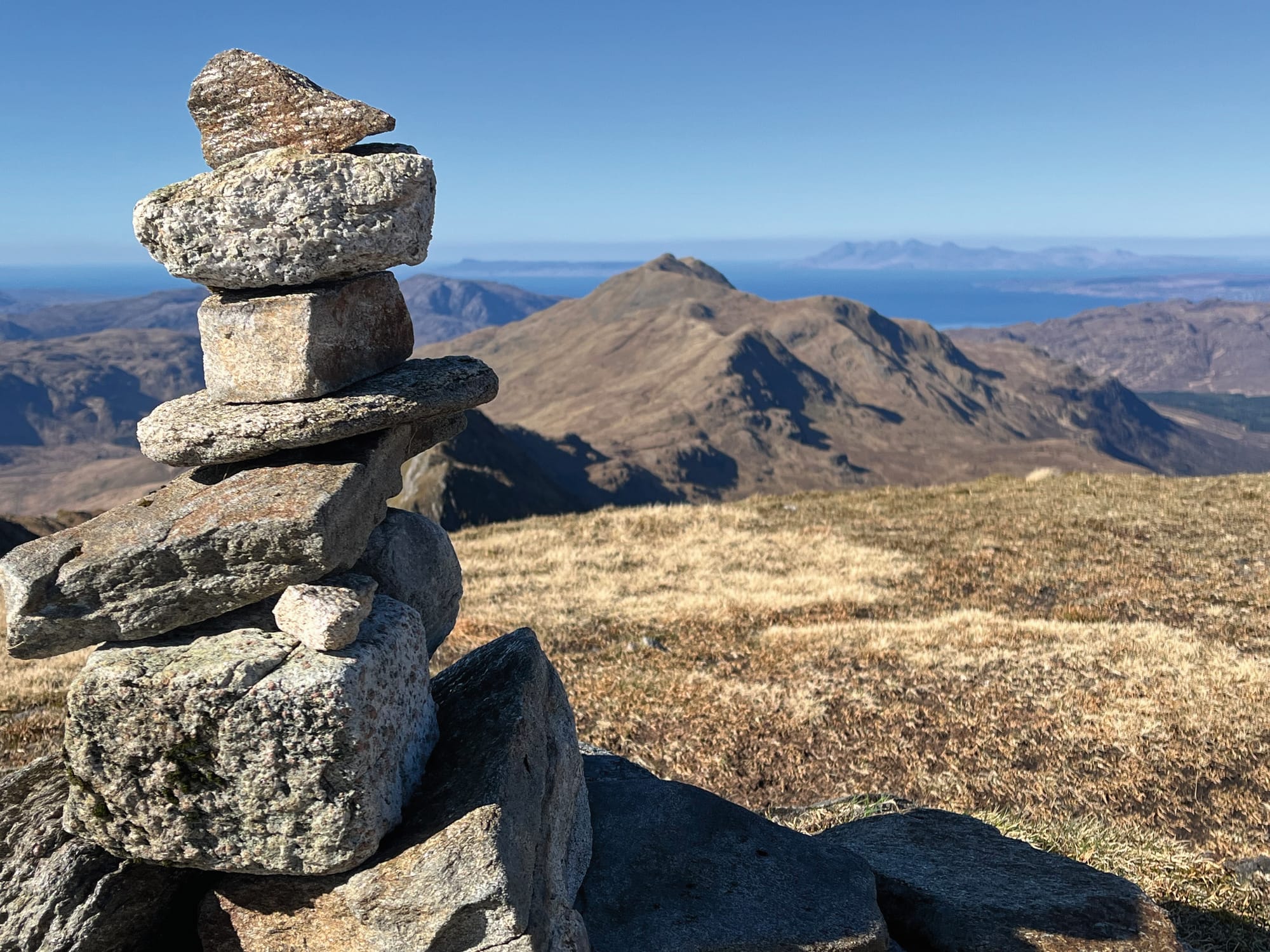
Glorious views stretched off in every direction. To the south, the tangle of mountains and coast stretched in shades of blue with distant coastal mountains down to Ben Cruachan in Argyll.
Out to the west, The Minch gleamed a deep blue studded with islands like Rum and Skye wearing its crown of the Cuillin mountains magnificently.
On top of the world
For once, the mainland provided the main drama. A wall of mountains offered a stunning backdrop to the peak of Stob a' Choire Odhar.
The wall was only broken by the great gap of Loch Hourn reaching back into the interior.
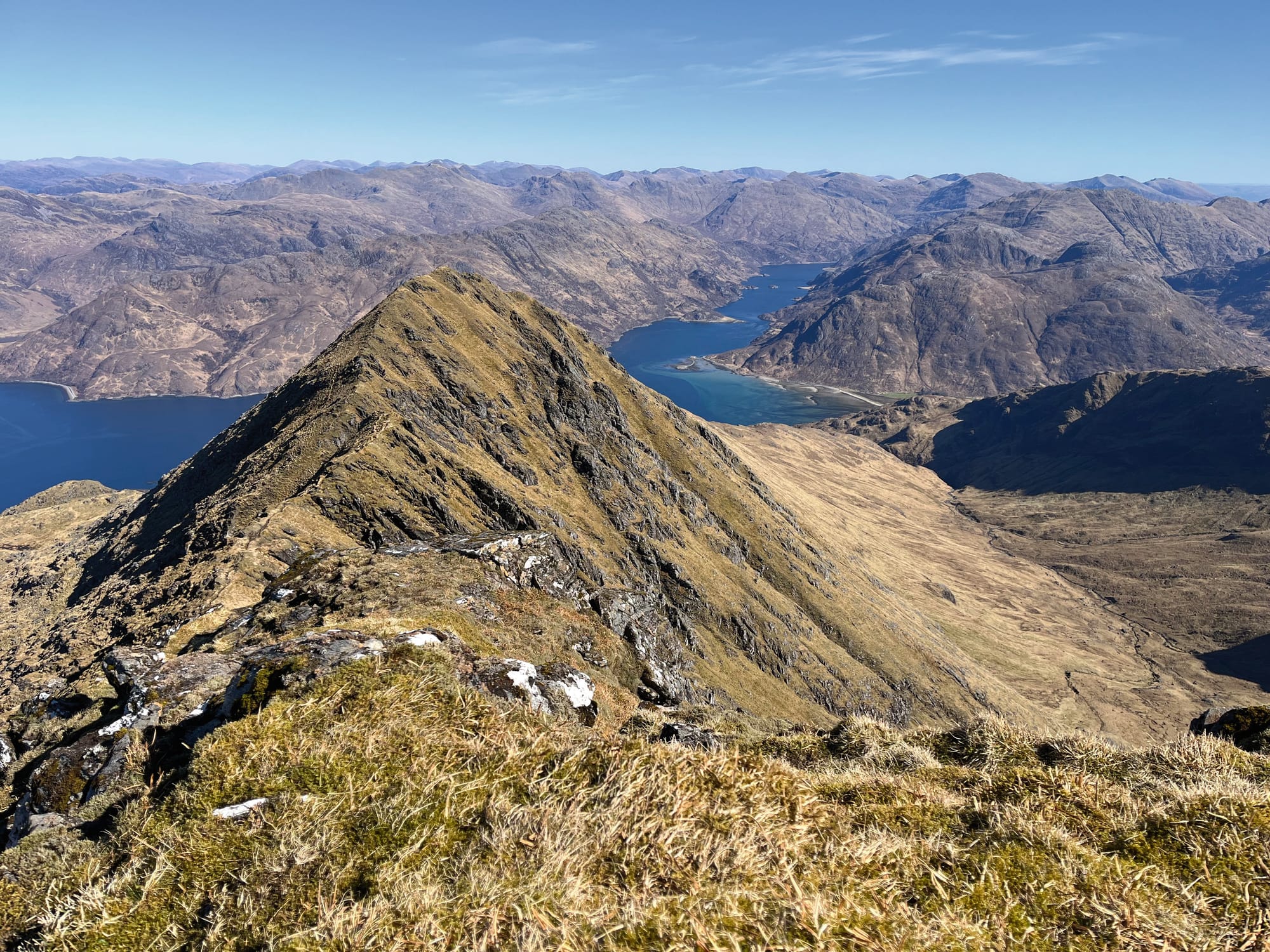
I walked down over the ridge of Stob a’ Choire Odhar marvelling at the views. I contemplated the very long way down the mountain, back to the campsite, along the loch, back to civilisation…
It didn’t matter, because it felt like I had arrived, because this place so far away felt like home.
A different Knoydart adventure
Our journalist Daniella shares her trip to Knoydart by boat
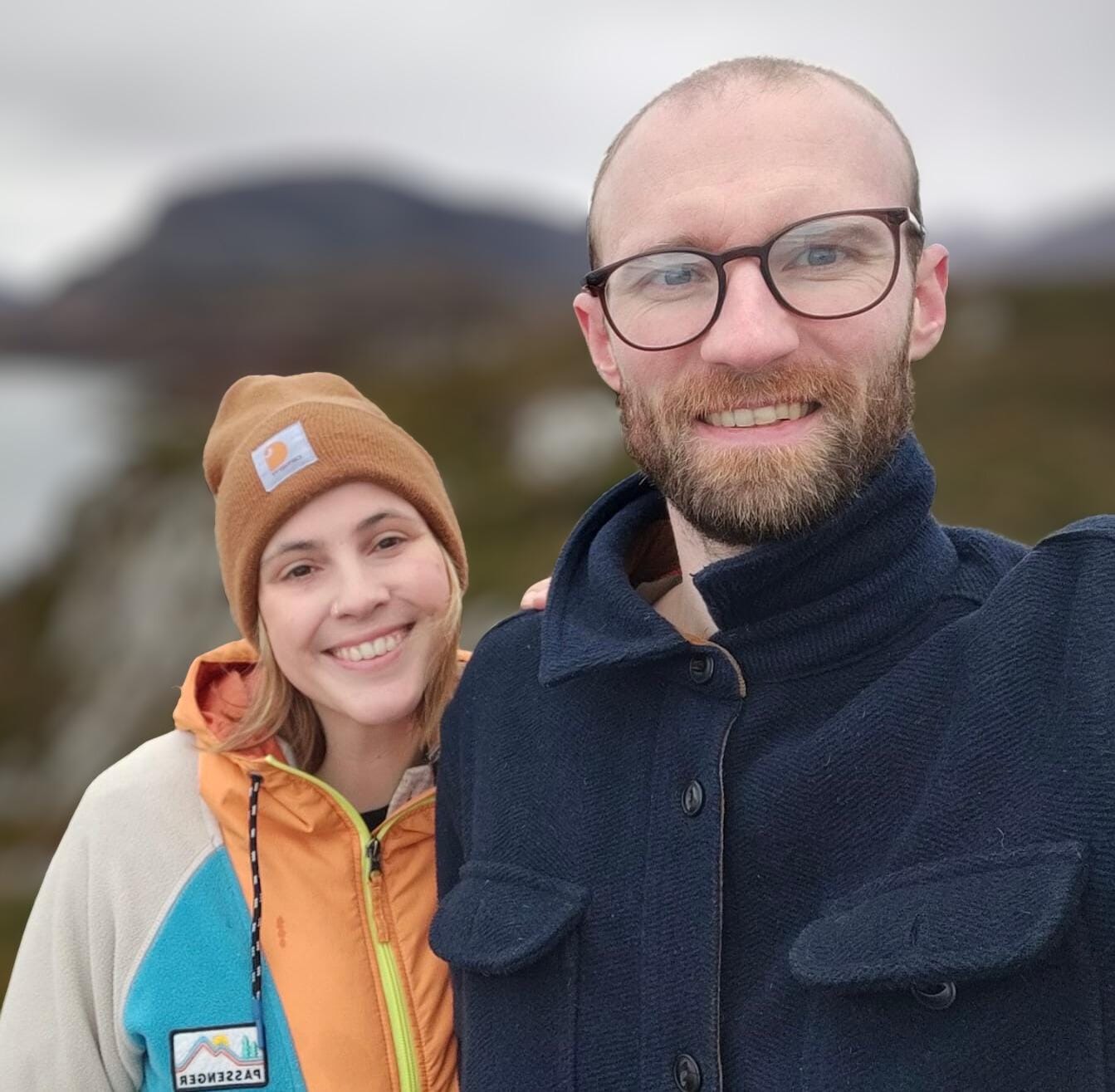
Knoydart is a place I’m lucky to have visited many times.
I used to live across the water in Mallaig, a fishing village at the end of the Road to the Isles, the 46-mile stretch between Fort William and Mallaig, as well as the end of the West Highland Railway Line – the train route famed for its scenery and the Harry Potter films, featuring the Glenfinnan Viaduct and steam train.
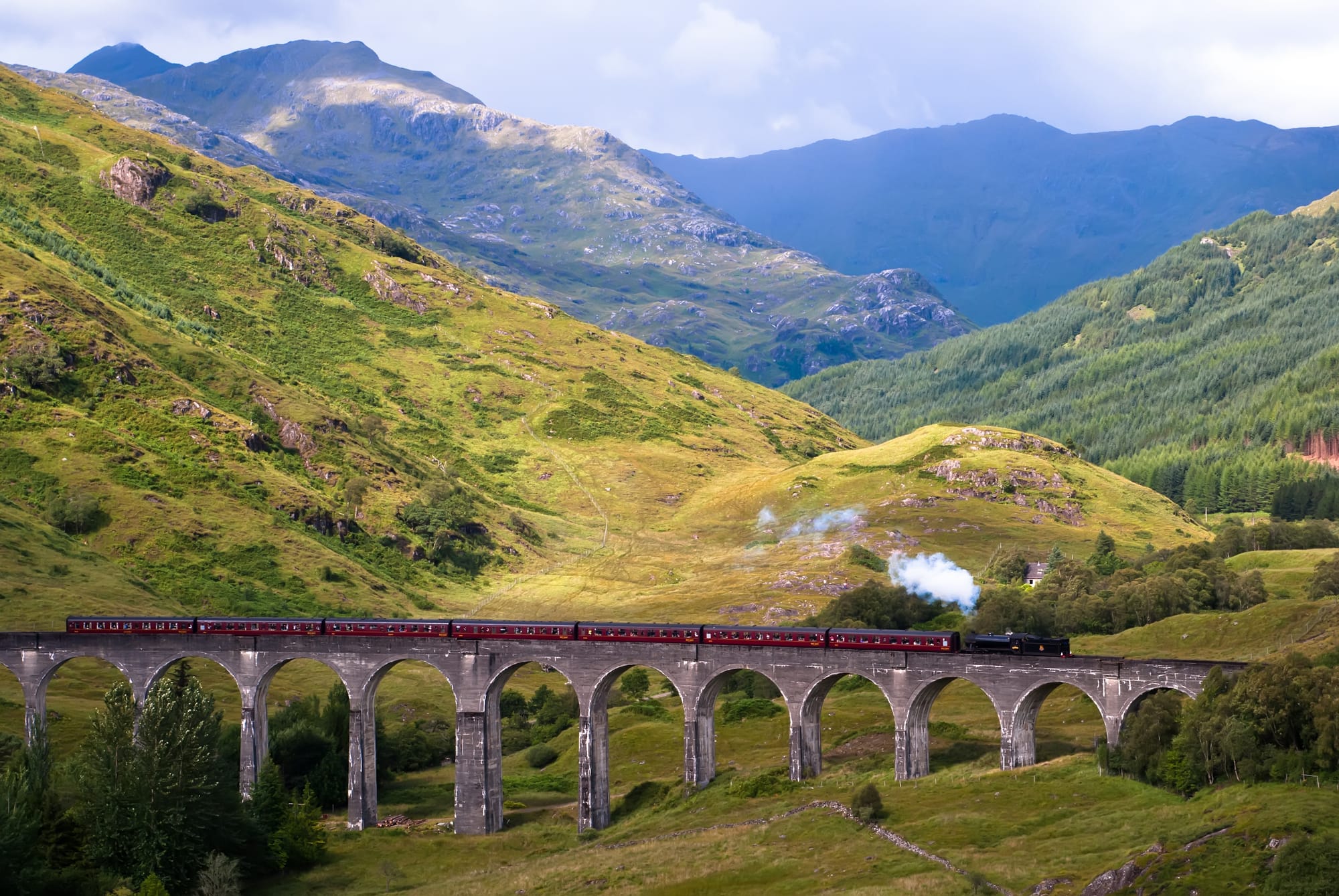
In summer, hundreds of tourists – often in wizarding gear – fill the village before heading back on the historic train whose thick smoke hangs in the air.
I visit regularly to see family in Mallaig, and when I do, I always book myself in for at least one night in Knoydart to catch up with my old school friends.
Getting to Knoydart, the easy way
Though the walk-in remains on my bucket list, I’ve always chosen the easier route: the boat service run by Western Isles Cruises.
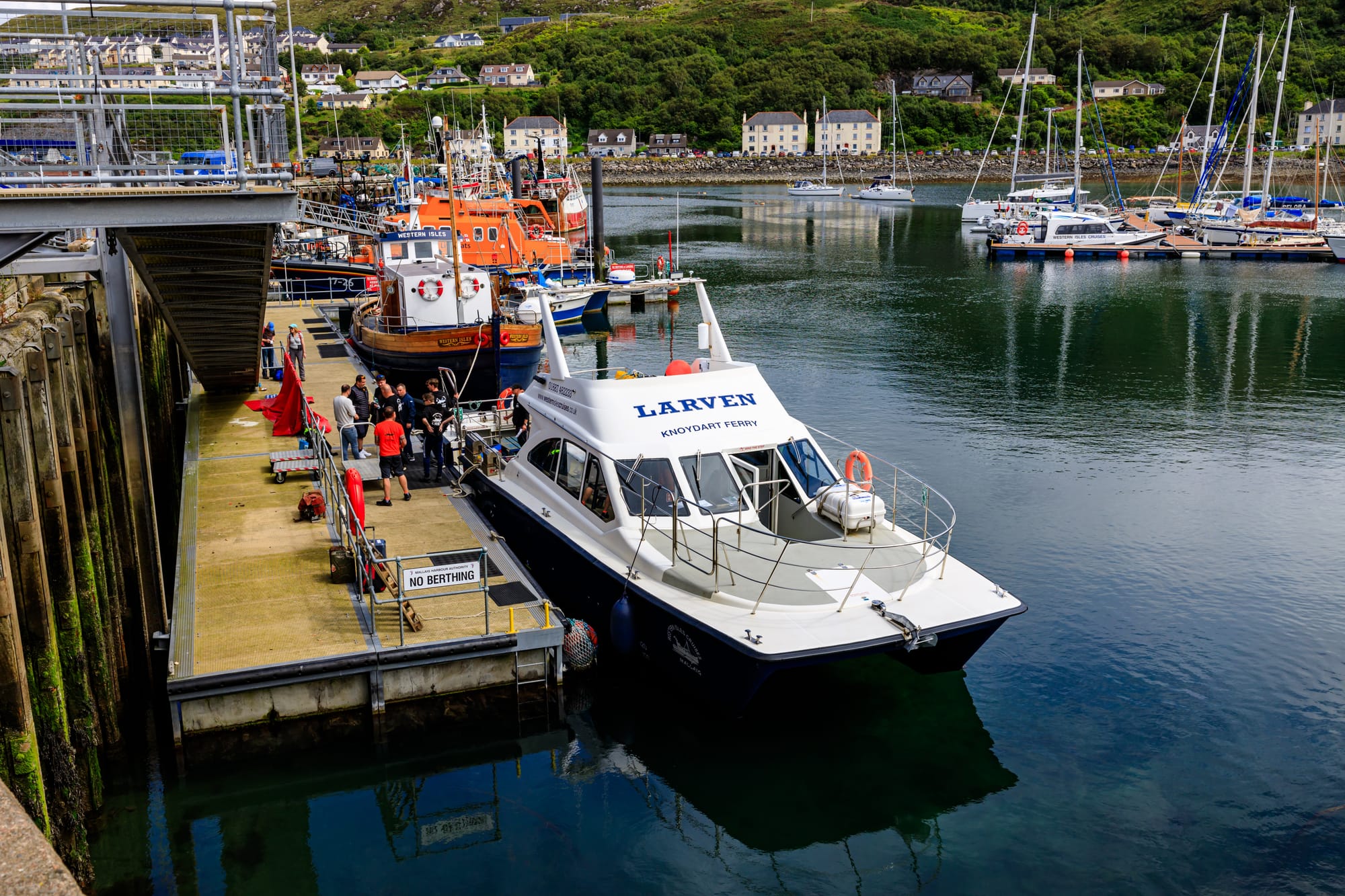
It was the same this time, as I made my way to Mallaig harbour on a grey late-summer morning. Depending on what boat runs for the time slot you booked, the journey to Knoydart takes around 25 to 45 minutes. It costs £16 return and it is best to book ahead.
The boat is not just a ferry for visitors, but also a service for locals going back and forth, as well as their way to get their mail and shopping. It can, therefore, fill up quickly in high season (May–September).
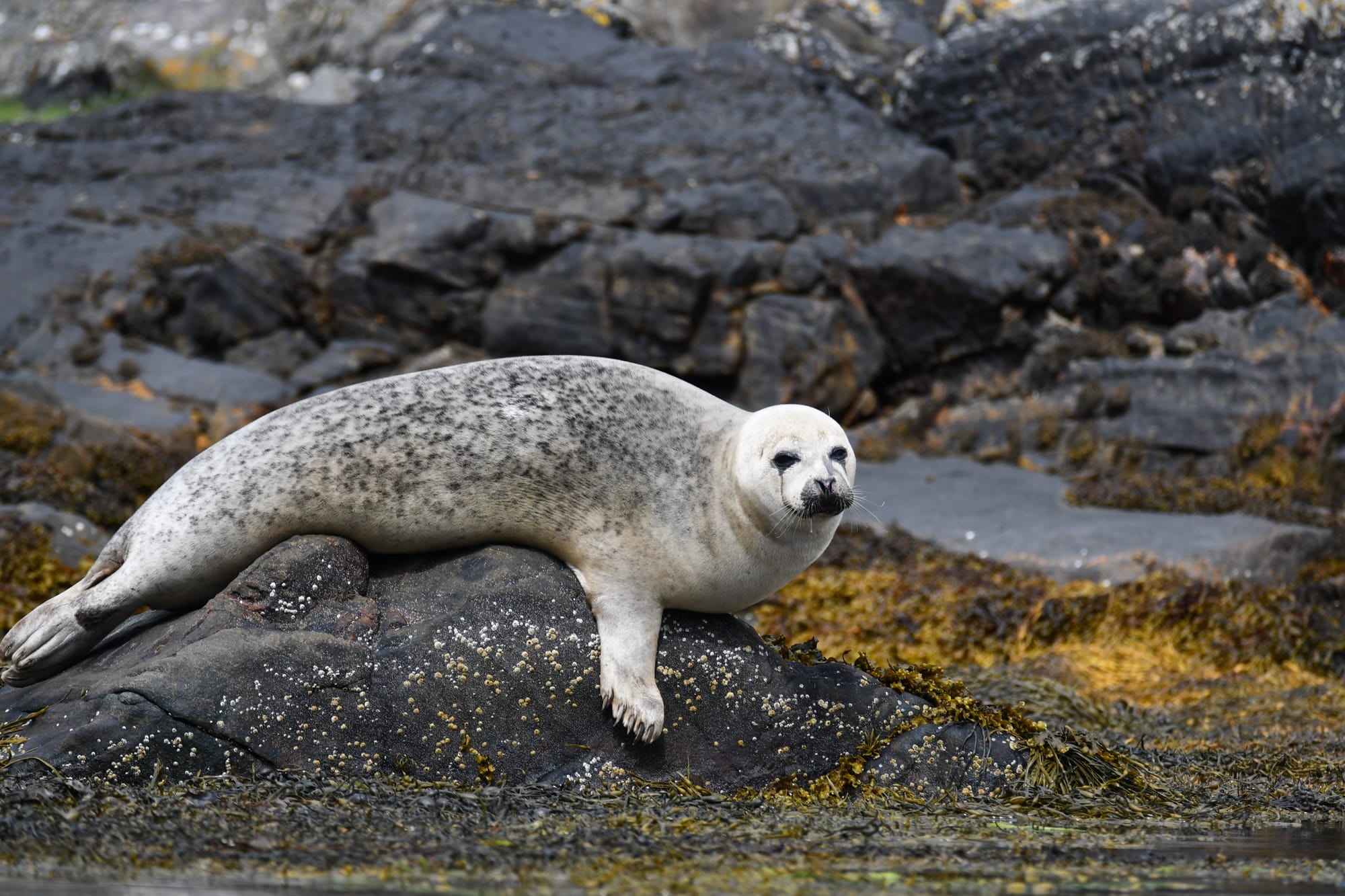
It may feel less adventurous than walking, but travelling by boat has its perks, as the waters here are great for wildlife spotting.
Ferrying over, I’ve seen seals, porpoises, dolphins, and seabirds. None of them appeared this time (much to the disappointment of my husband), but the beautiful scenery certainly made up for it.
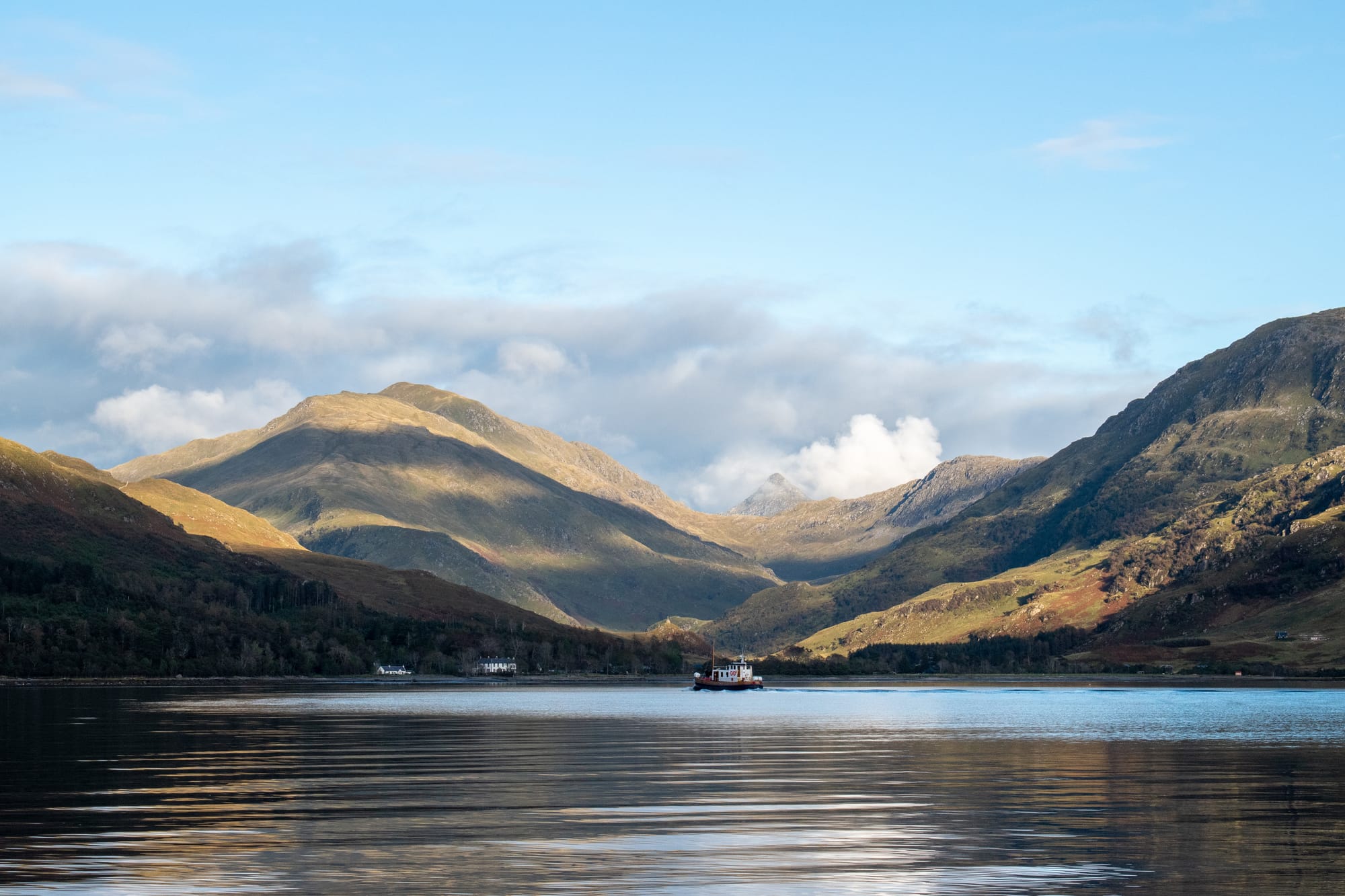
If you look up when entering Loch Nevis, you'll see a white statue called Our Lady of Knoydart, a landmark welcoming visitors to Inverie Bay.
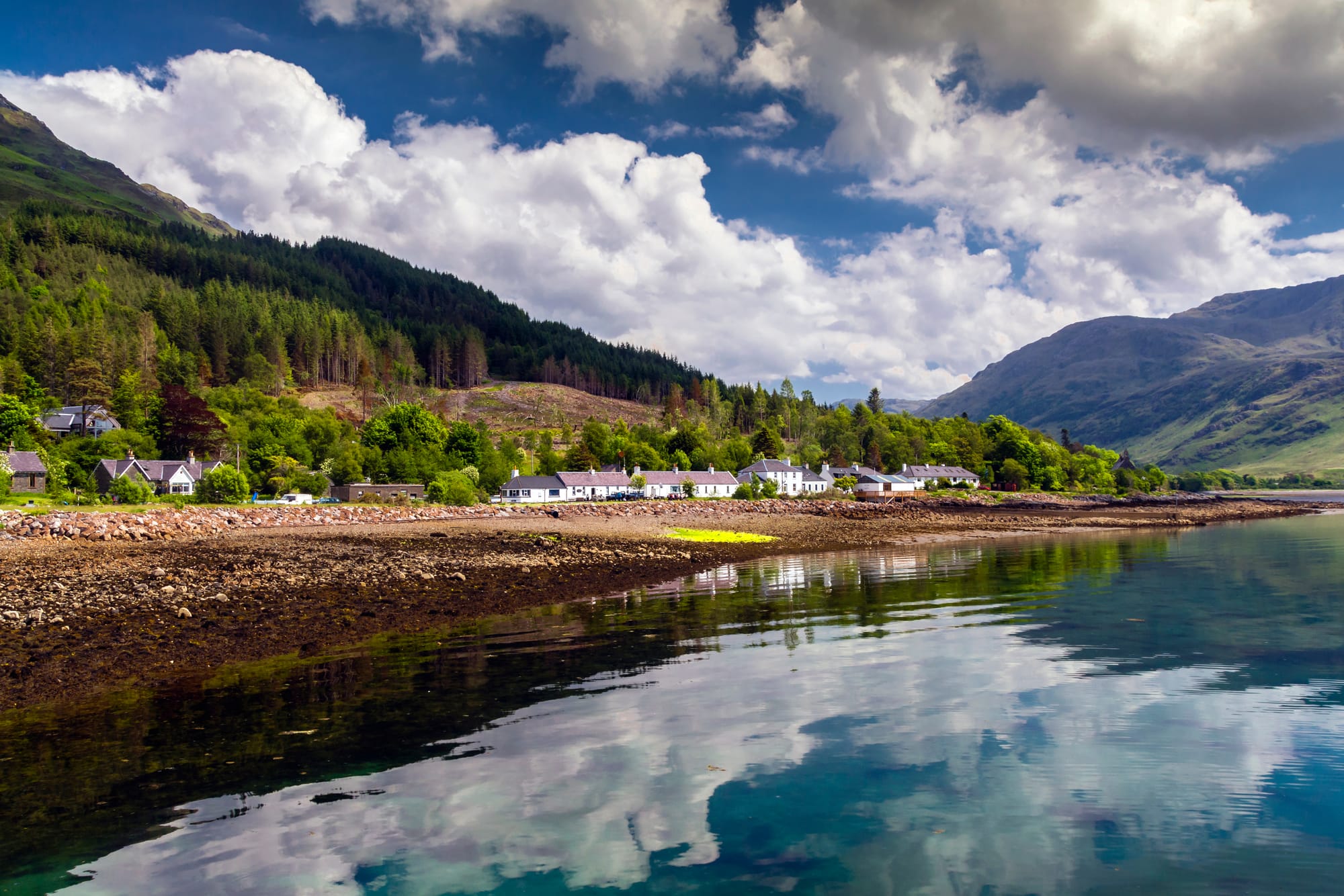
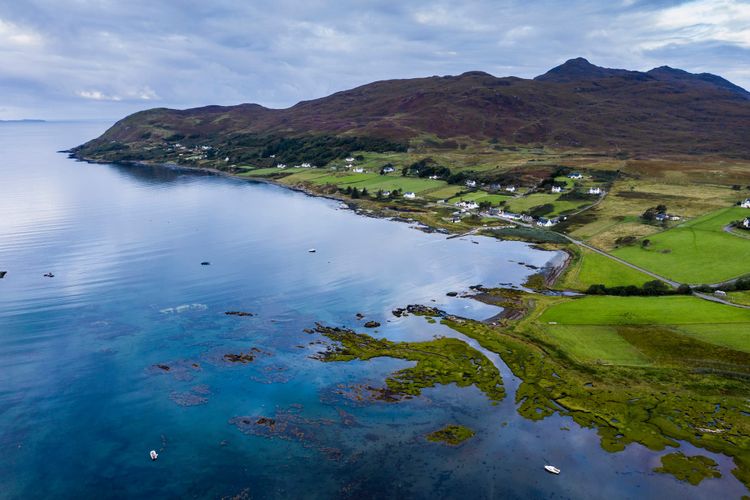
It is then, too, that the row of houses making up Inverie, Knoydart’s main village, as well as the mountains towering behind them, come into view.
When we docked, passengers formed a human chain along the steps of the pier to unload luggage and mail. It’s not required to help, but if you can, it is a lovely way to meet people.
Where to eat, drink, and stay
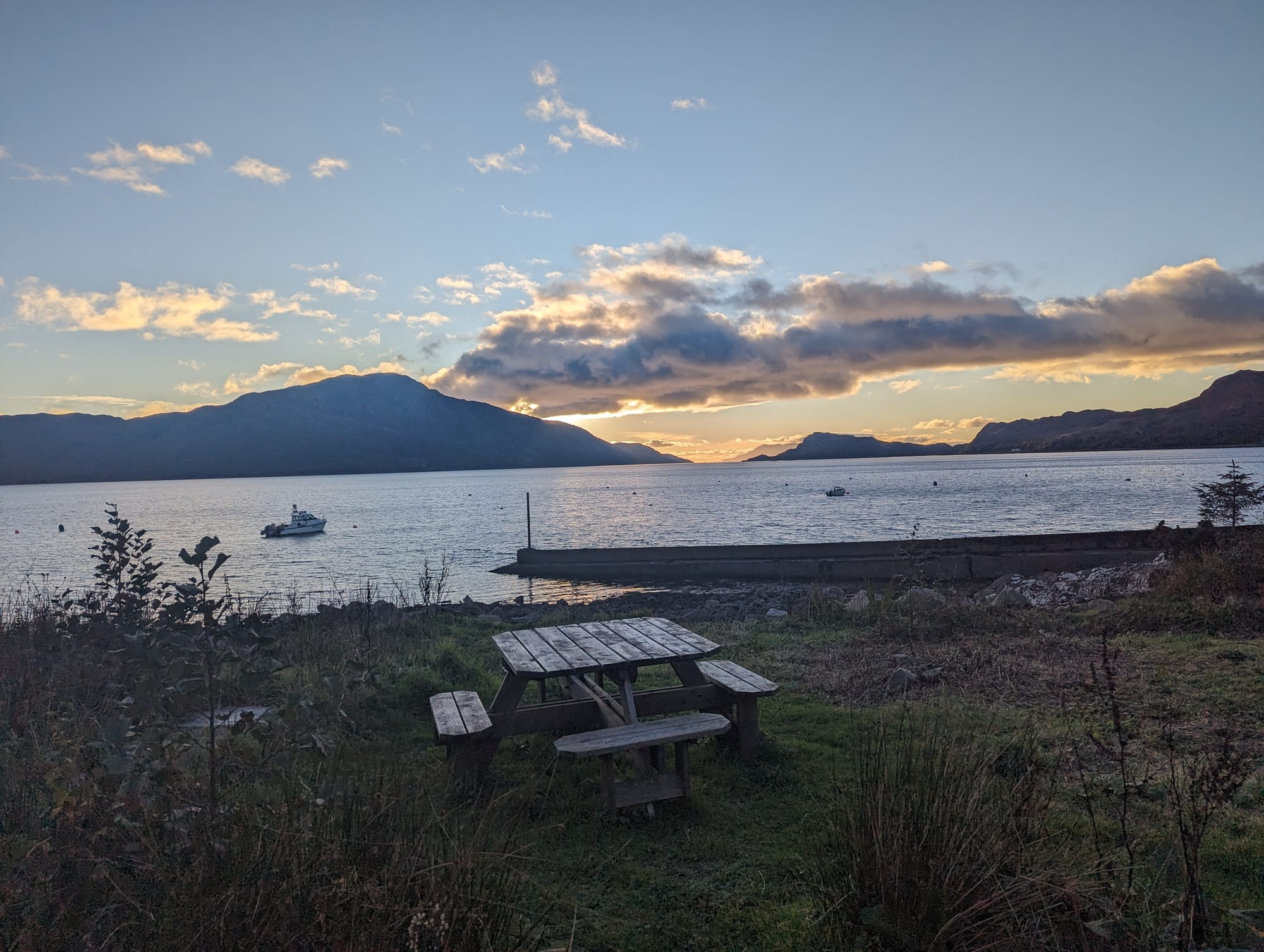
We booked one night at the Knoydart Foundation’s bunkhouse, a 20-minute walk from the village towards Long Beach.
Even if you’re just day-tripping, this walk along the main road is a must, as it offers a taste of Knoydart’s vast woodlands and stunning views over Loch Nevis.
The bunkhouse (£29pp per night) is simple, clean, and cosy, with dorm rooms, fresh linen, and a welcoming common room with wood-burning stove, books, games, and DVDs – the perfect hideaway after a day exploring.
Alternatively, there is also a selection of more boutique B&Bs or, on the other end of the spectrum, Knoydart Foundation’s dedicated campsite on Long Beach (£10 a night).
The UK’s remotest pub
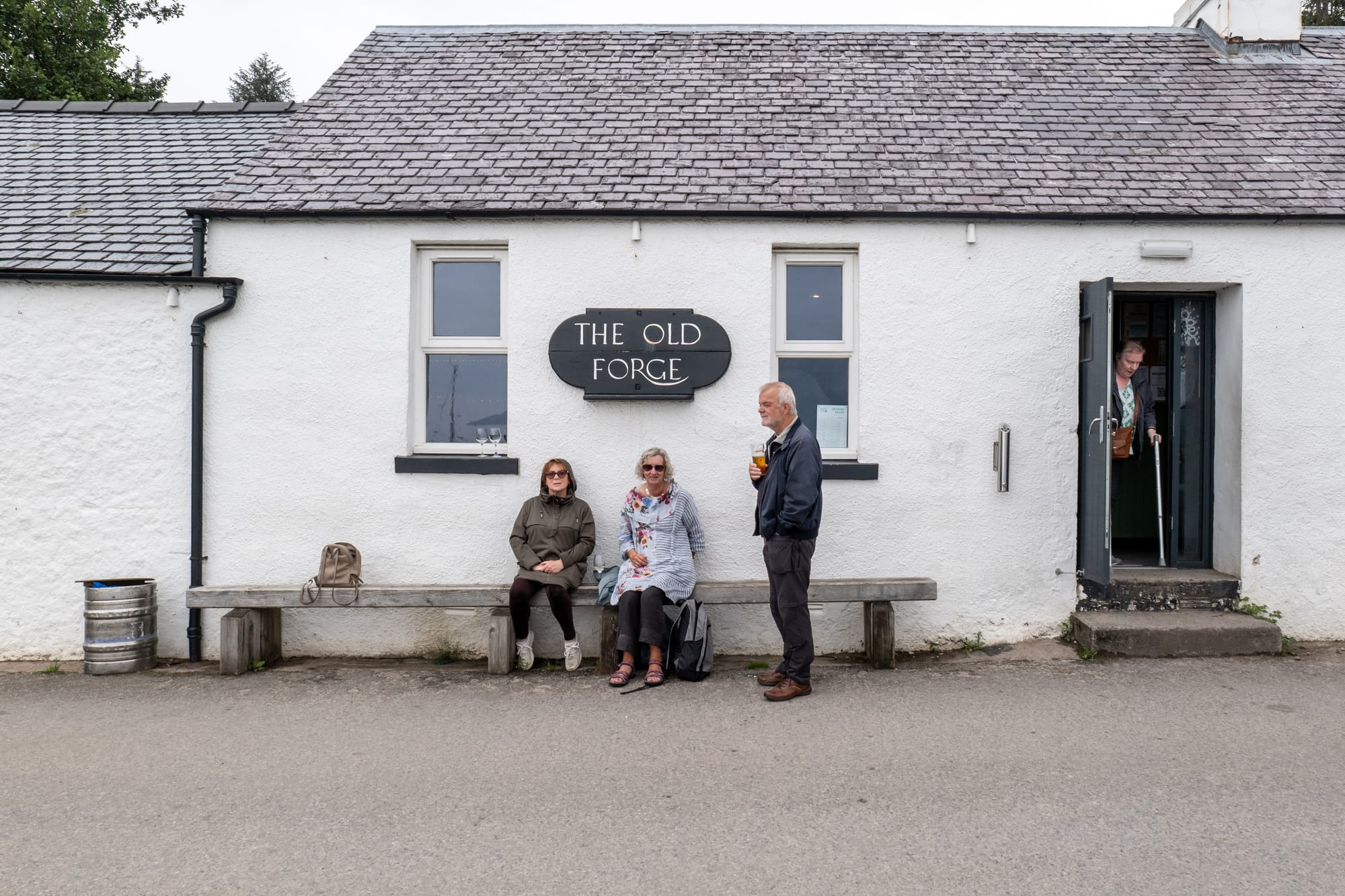
Of course, no trip to Knoydart is complete without a visit to The Old Forge, the UK’s most remote pub, which has been community owned since 2022.
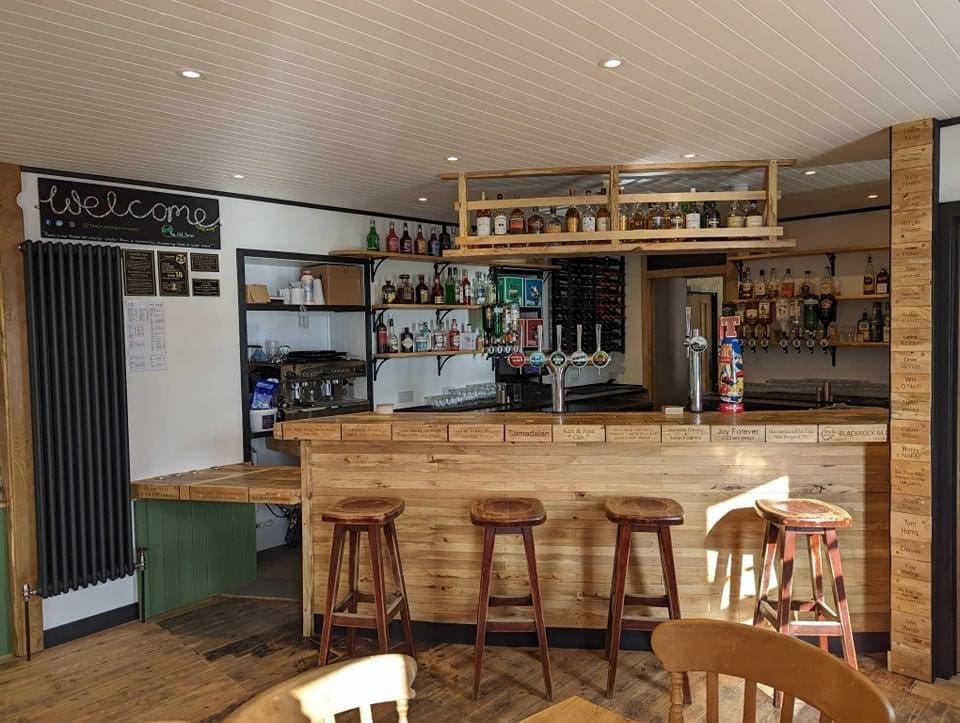
It has long been both a draw for visitors as well as a meeting point for locals, and it was here that we joined our friends for an evening of pints, chats, and live music.
It is an amazing atmosphere and one I am yet to fully experience elsewhere.
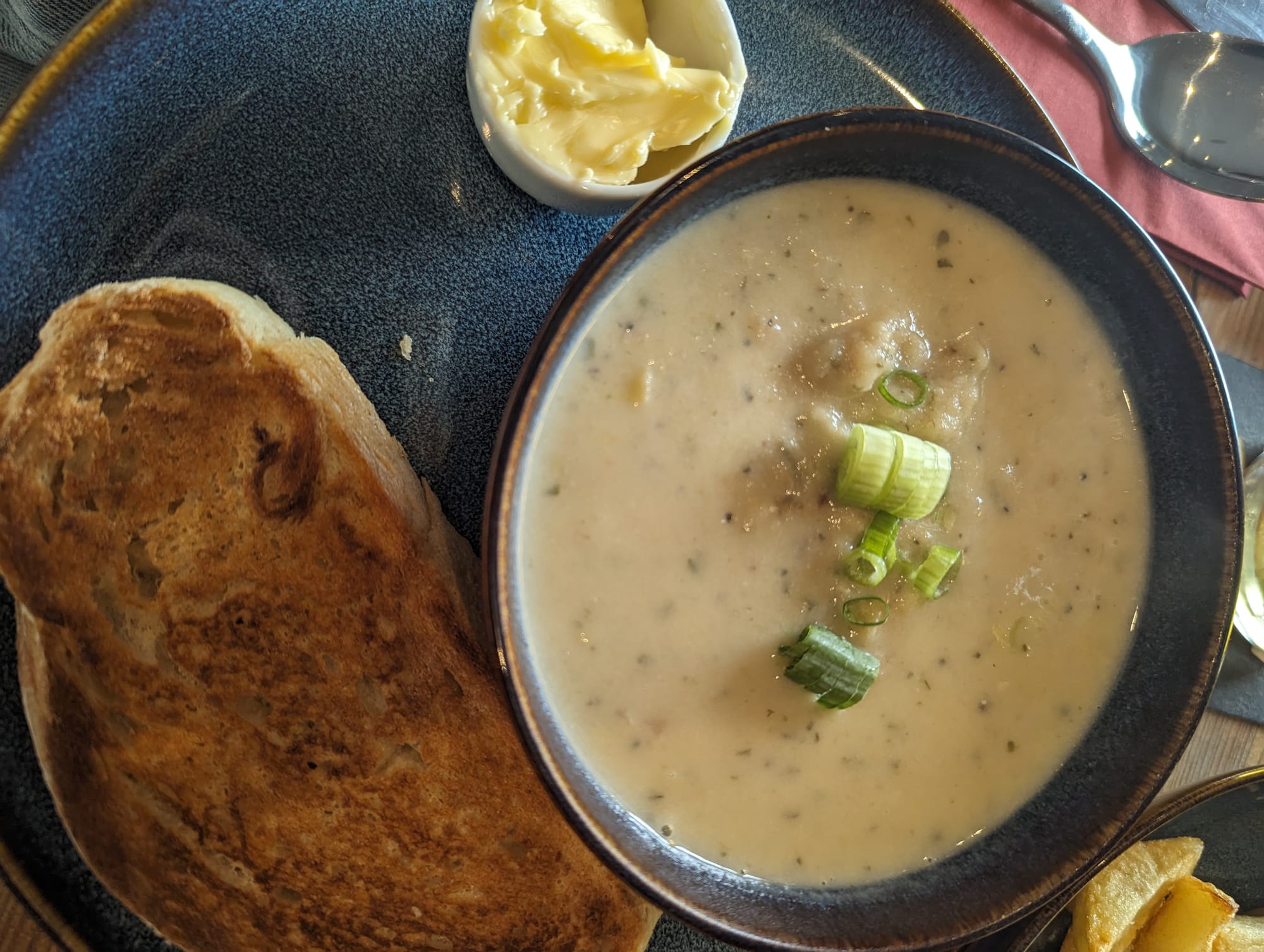
The menu at the pub celebrates local produce – fresh seafood, beers from both Knoydart Brewery and the nearby Isle of Eigg brewery, and venison from the peninsula.
The Cullen skink was some of the best I have ever tried, and the venison burger was so delicious, we bought several portions of venison from the community shop the next day.
We didn't make it this time, but I also love a stop at the Pottery and Tearoom. It has some great home baking, as well as tea and coffee.
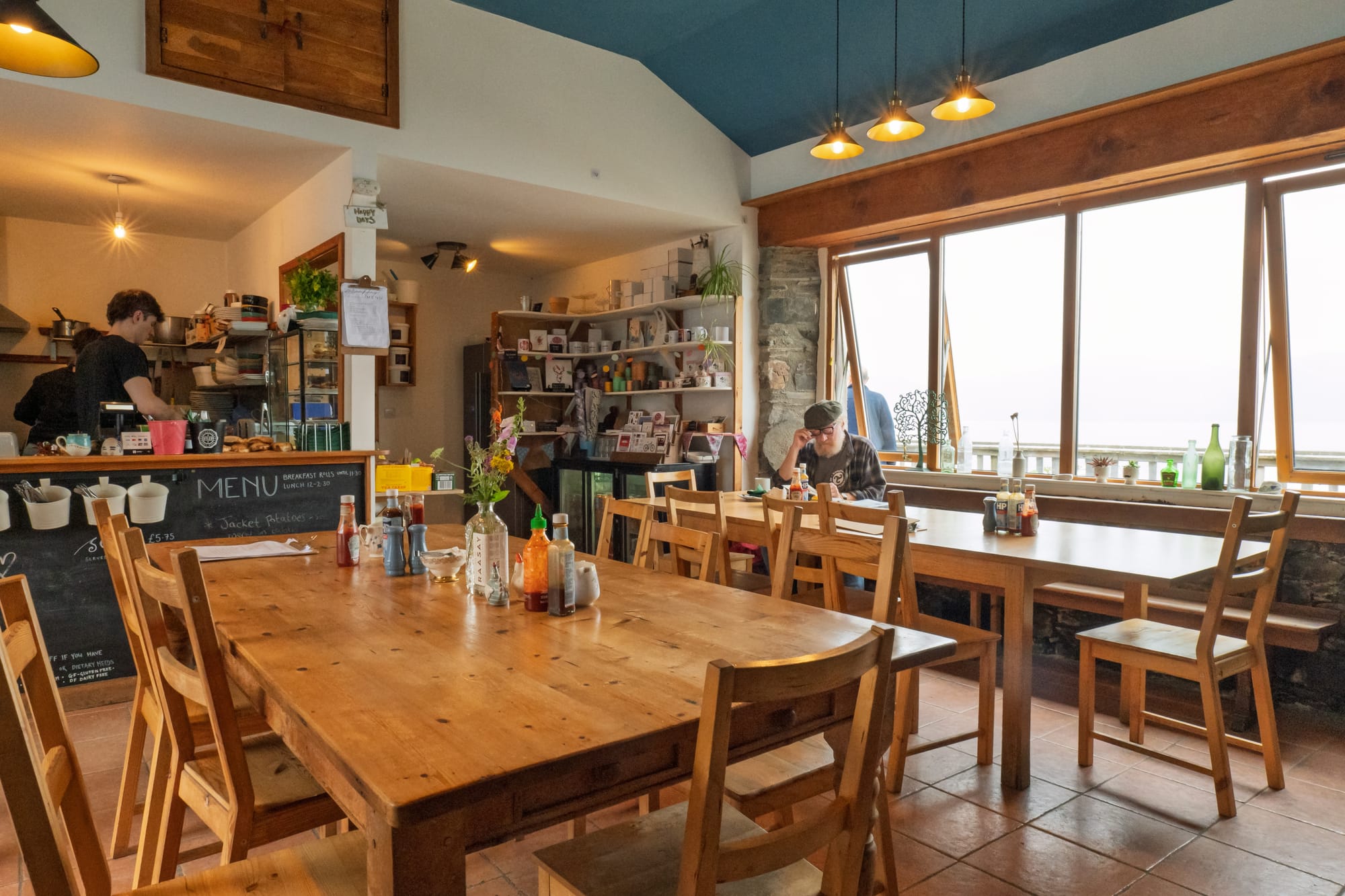
The next morning, we packed up for one last wander towards the pier, the so-called 5km (3-mile) Knoydart in a Knutshell walk. From the bunkhouse we followed the shore to Long Beach, then looped back towards the main road before returning for our ferry.
As always, standing on the pier with friends, we were already planning my next visit. I can't ever stay away from Knoydart too long!
Would you brave Heaven and Hell to reach The Old Forge? Or would you rather enjoy the wildlife and views from the ferry?
Let us know in the comments!
Scots Snippet
Word of the Week
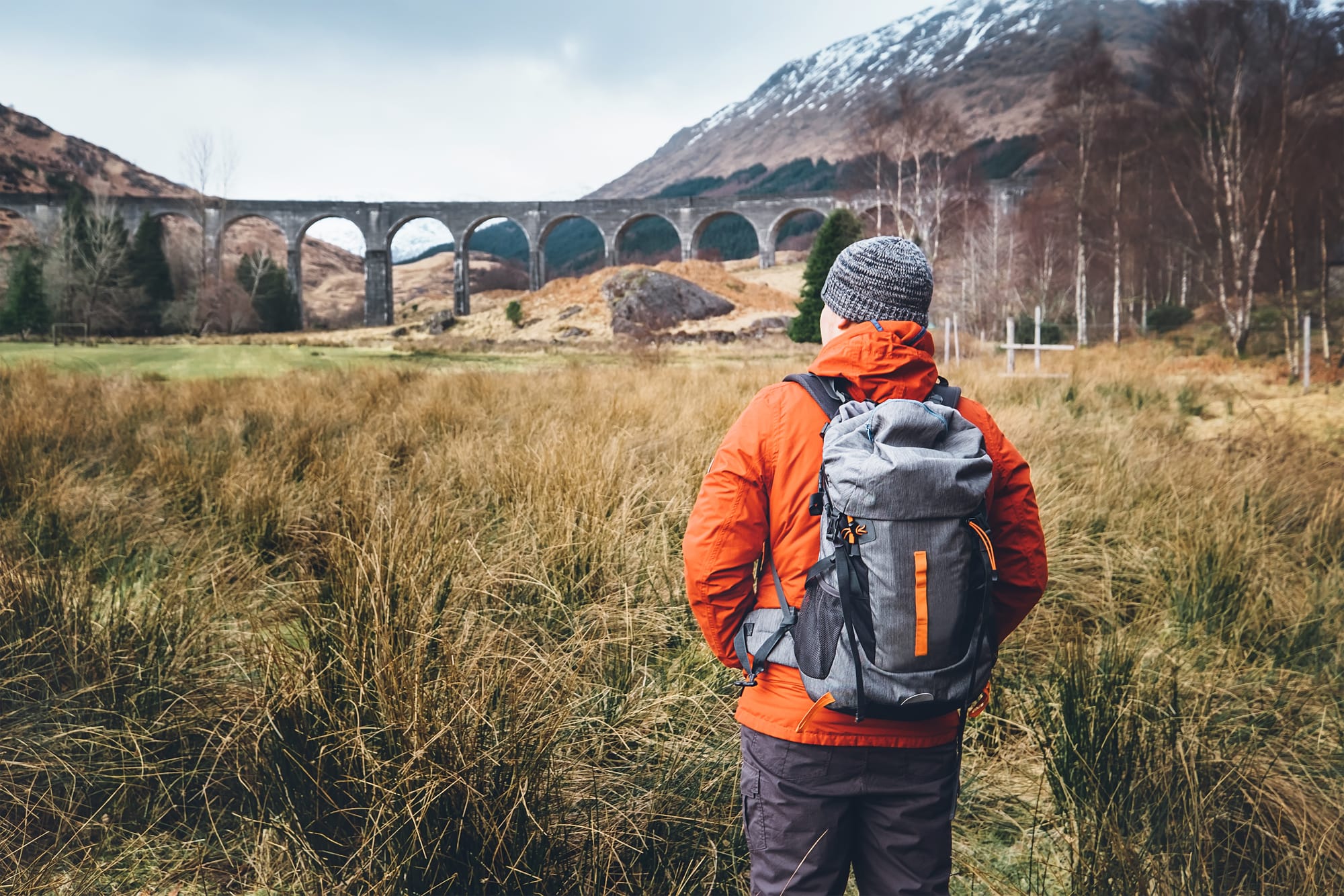
"Stravaig"
(v.) - to wander or roam.
The best way to explore the outstanding landscapes of our country – taking your time to enjoy the beauty of the journey.
Follow along for more adventures on Instagram!
Member discussion