
Scotland's legends: the magic and myths hidden in our landscapes
EVERYBODY loves a good story.
Scotland is rightly famous for its storytelling tradition. This might be a small country, but it has some big stories and they aren’t set in a land far far away – they’re in every village, glen, loch, nook and cranny.

A story can bring a pile of stones or an empty hillside to life and transform them into something incredible. Sometimes it’s folklore, with a lesson behind the story, but often real history is more exciting than any fiction.
We have a seemingly endless supply of these tales. Here are some of my favourite stories behind real places that you can visit around Scotland!
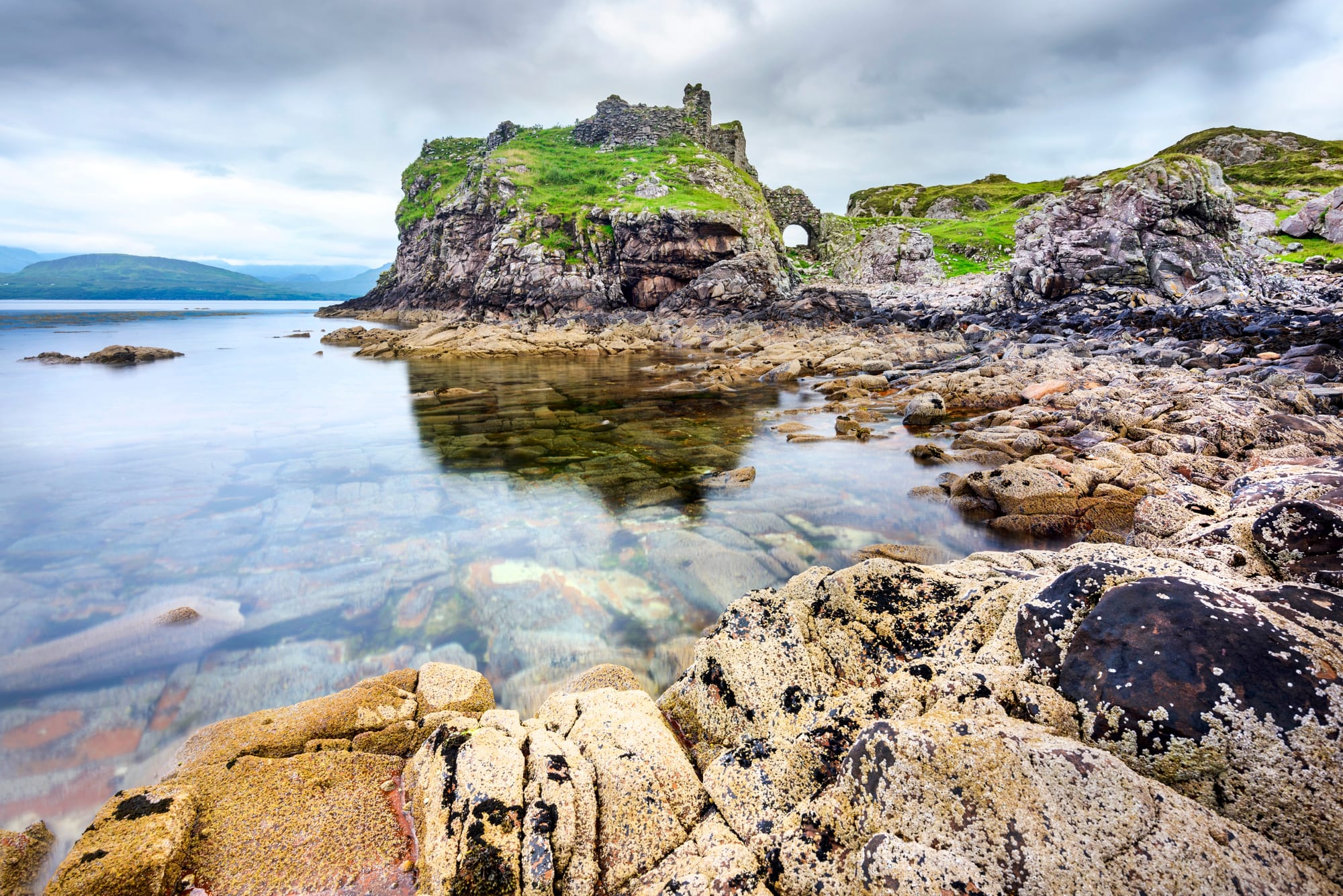
Kilchurn Castle – Argyll
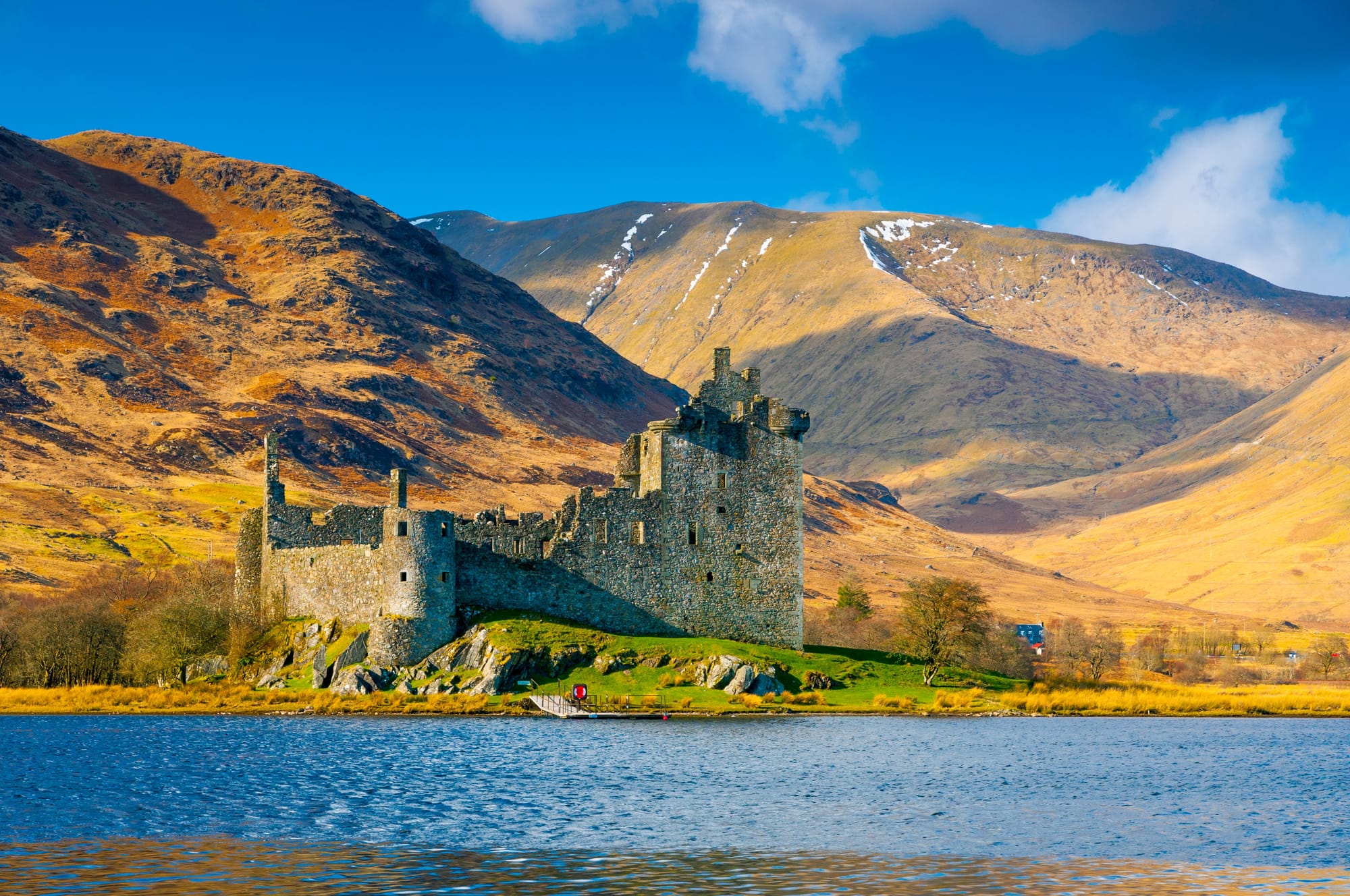
Thousands of people visit Kilchurn Castle on the banks of Loch Awe every year, but this is more than just a pretty picture. It was built in the 15th century by an incredible character with a dramatic story, Colin Campbell – the Black Knight of Rhodes.
After seven years away from home, fighting on Crusade, Colin had a terrible dream. Consulting a priest about its meaning, he was advised to race home as fast as possible to avert disaster for his family.
In his absence, his rival, the Baron MacCorquodale, had convinced Colin’s wife Margaret that he had died. All his letters home been intercepted and destroyed by MacCorquodale’s men. Reluctantly, Margaret conceded to marry the Baron for protection.
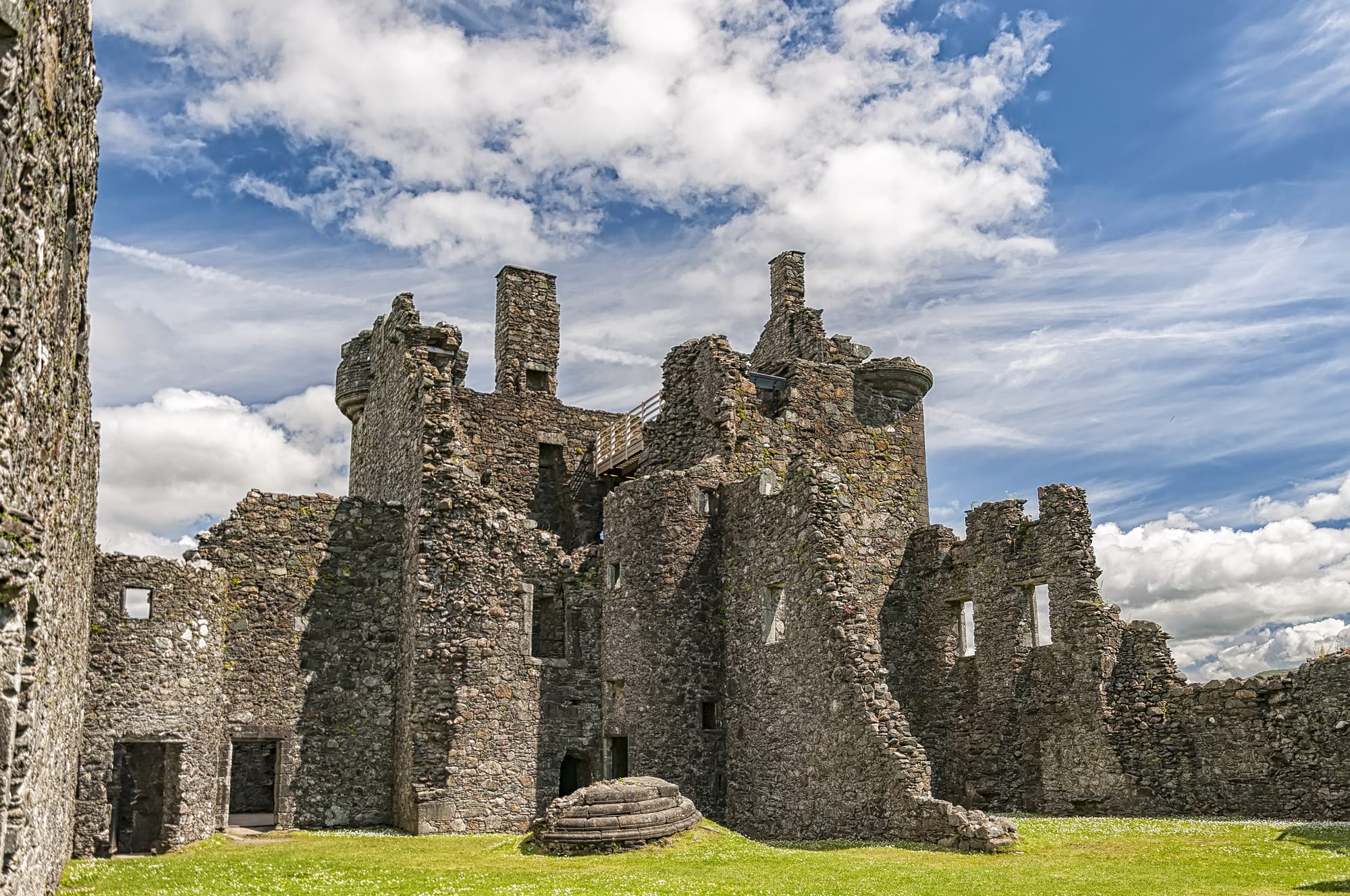
Colin finally arrived back at Kilchurn on the morning of the wedding. With no time to wash or change, he put his dishevelled look to good use, playing the part of a beggar and being welcomed in as an act of charity to celebrate the big day.
He ate well but declared he would only drink what was poured by the lady of the house. A bemused Margaret handed this hooded stranger a goblet.
Draining it, Colin handed it back to her with a clink. Peering in, Margaret recognised a special ring inside, a talisman she had given her husband to keep him safe.
Colin threw back his cloak as his wife declared that the true lord of Kilchurn Castle had returned. The Campbell clansmen sprang to action, chasing the Baron’s men out and the wedding feast was put to better use, celebrating their laird’s return!
Old Cramond Brig – Edinburgh
A fraction of those travelling over the modern Cramond Bridge into Edinburgh realise there’s a much more interesting medieval bridge hiding down below.
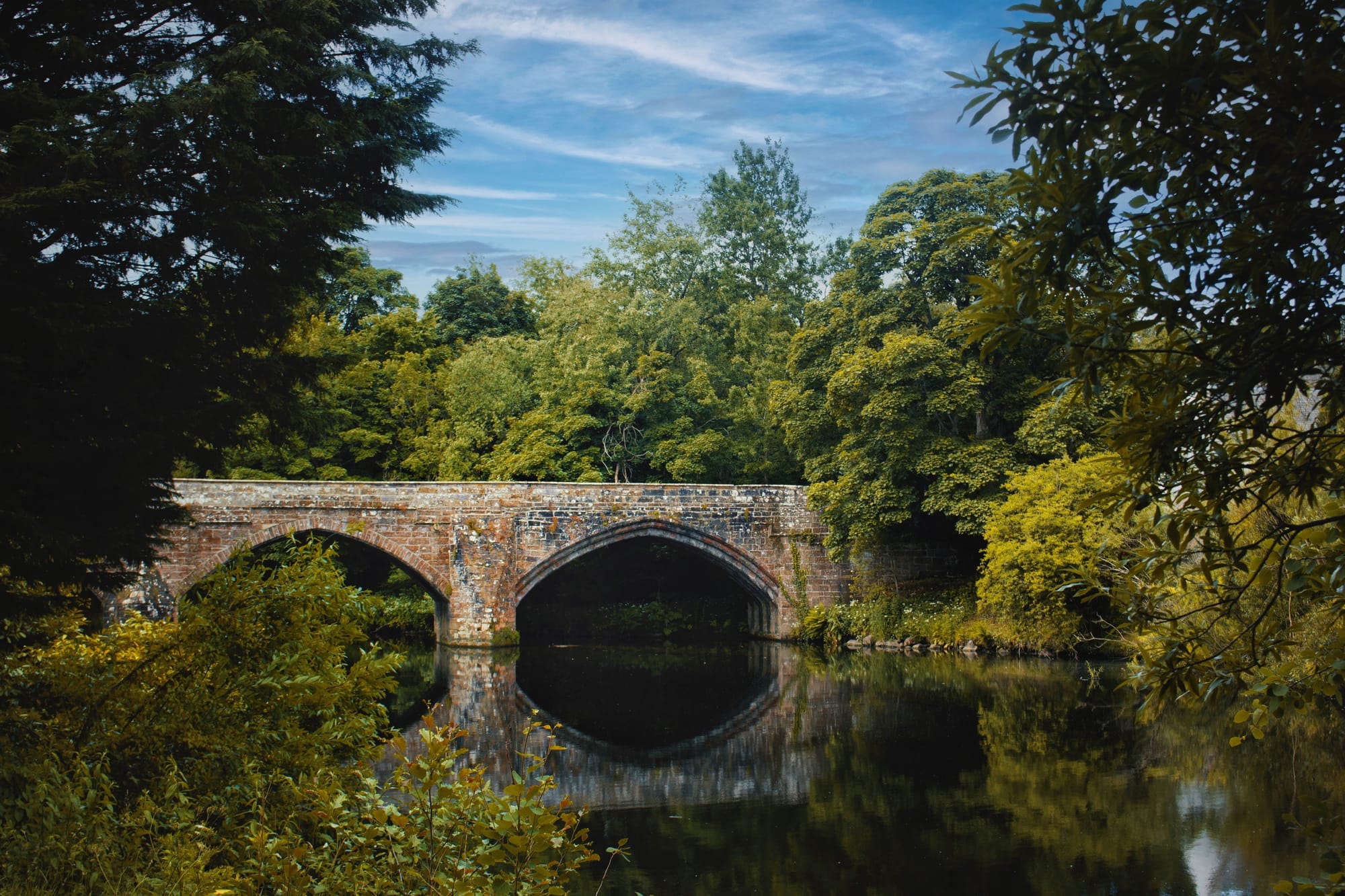
King James V crossed the Old Cramond Brig regularly while he travelled the countryside in disguise to better understand his people, all the while going by the codename Guidman of Ballengeich.
One day, he was set upon by robbers here, backing himself on to the narrow bridge where he could easier defend himself. Still, things were looking dangerous for the outnumbered James.
Thankfully, a local man called John Howieson saw the fight from his cottage and raced to the stranger’s aid.
The two of them fought off the thieves and John sheltered James in his cottage, washing his bloody hands for him. Without revealing his identity, the King asked John what reward he could give.
All the farmer wanted was to own his farm, but he didn't see what the Guidman of Ballengeich could do about that. James convinced him to travel to Holyrood Palace where he would help him petition the King.
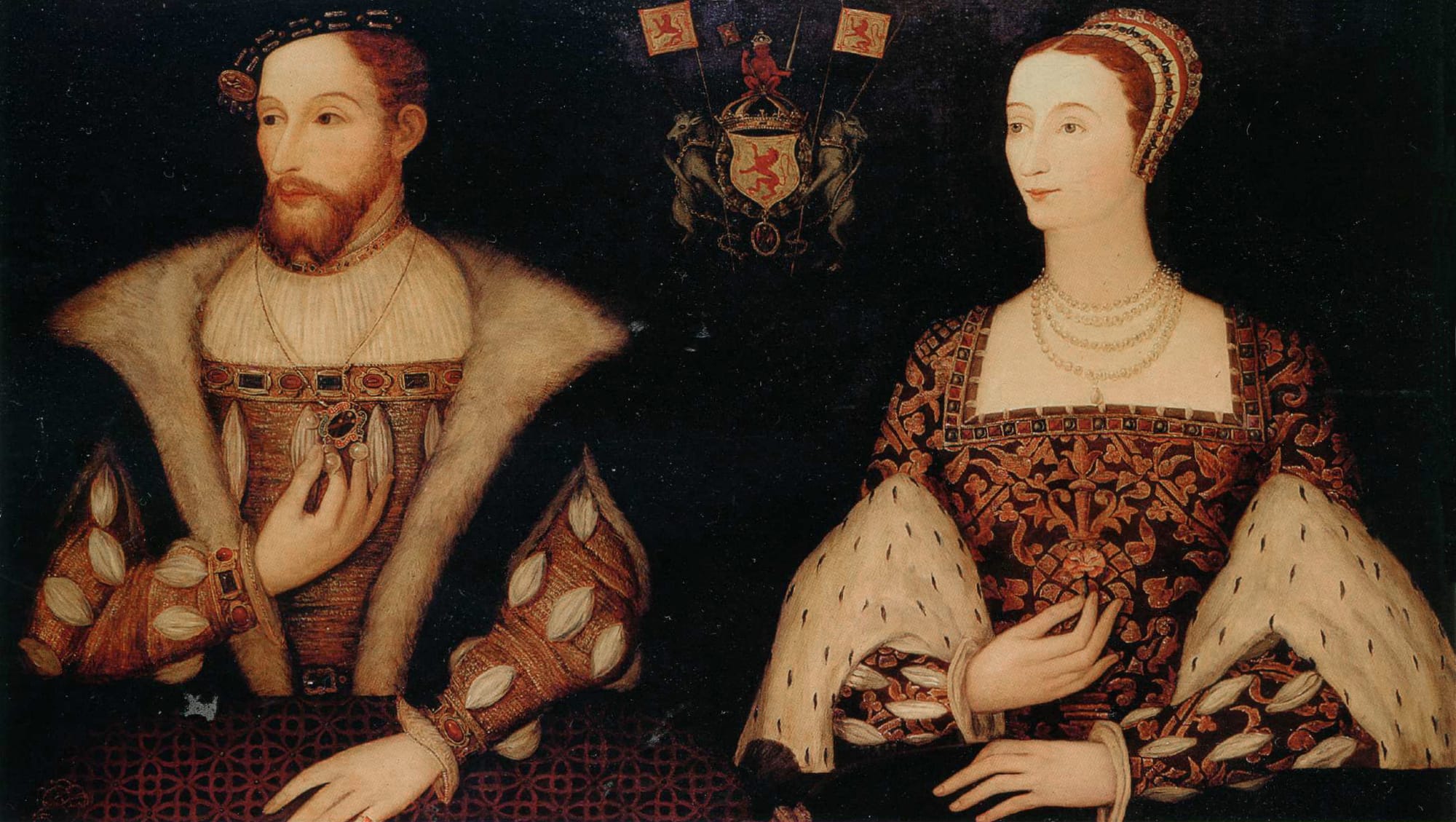
As he was guided into the great hall, John realised that he had never seen the King before. James explained that out of all the guests, only the King would be wearing a hat.
John quipped, "Well the King must be you or I then, since we're the only two wearing hats!"
James just turned and smiled at his companion who immediately dropped to his knees in front of the laughing King. He was rewarded with ownership of his farm on the promise that he and his heirs would always be ready with a basin of water to wash the King of Scots' hands.
The Maiden Stone – Aberdeenshire
Aberdeenshire has more than its fair share of fascinating Pictish Stones, but there’s one that’s a little bit more special than the others. In the shadow of Bennachie, the enormous Maiden Stone looms, covered in Pictish symbols and a Celtic cross.
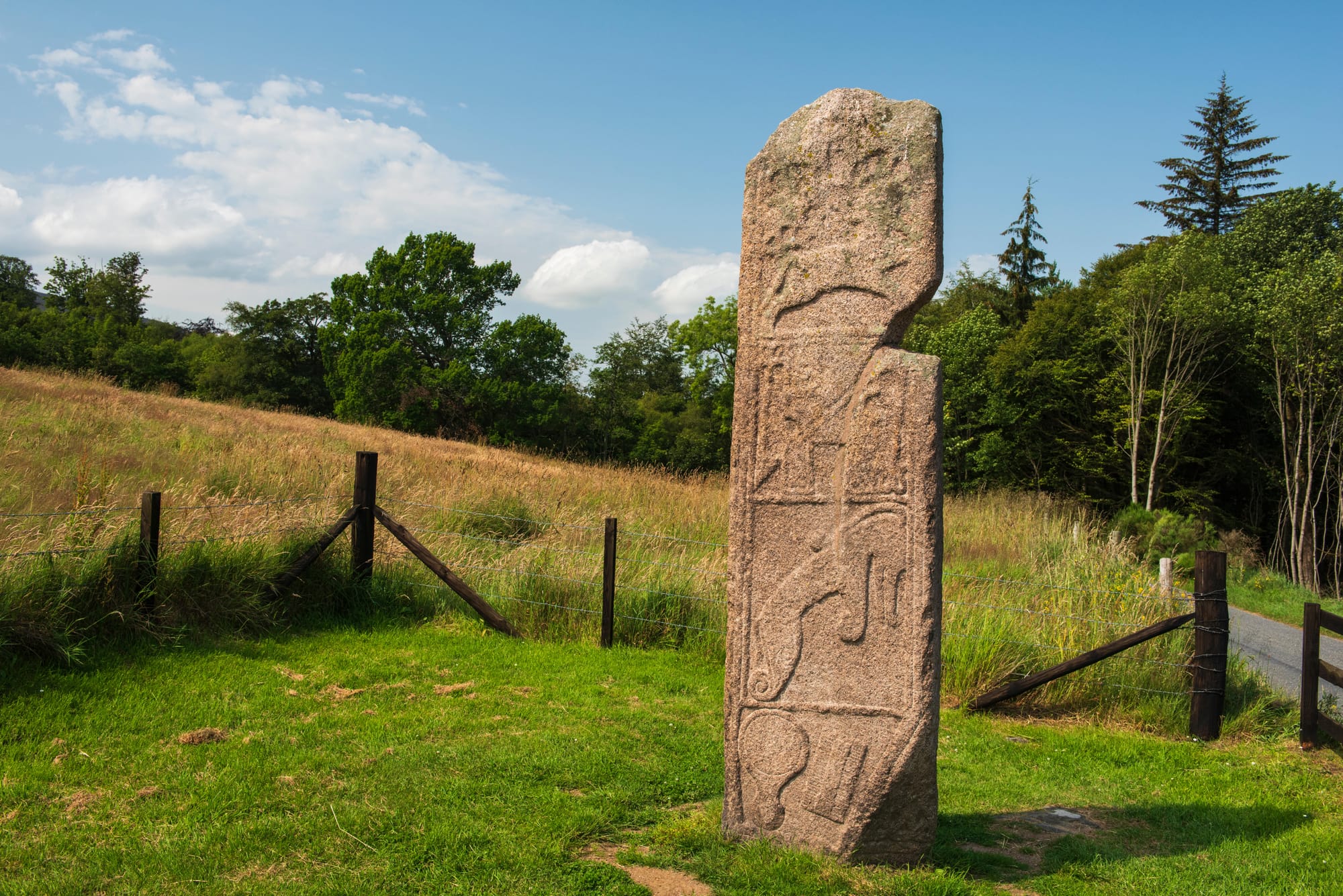
While archaeologists will tell you it was carved around 700 AD, storytellers have a very different explanation.
Not far from here lived a laird and his beautiful daughter who had been courted by every young man for a hundred miles. A collective disappointment could be heard around Aberdeenshire when she eventually agreed to settle down with one lucky suitor.
Then, as the maiden baked bannocks on her wedding morning, somebody new came calling.
The stranger was bold enough to try to convince her to call off the wedding, but no matter how handsome he was, she wasn't just going to change her mind.
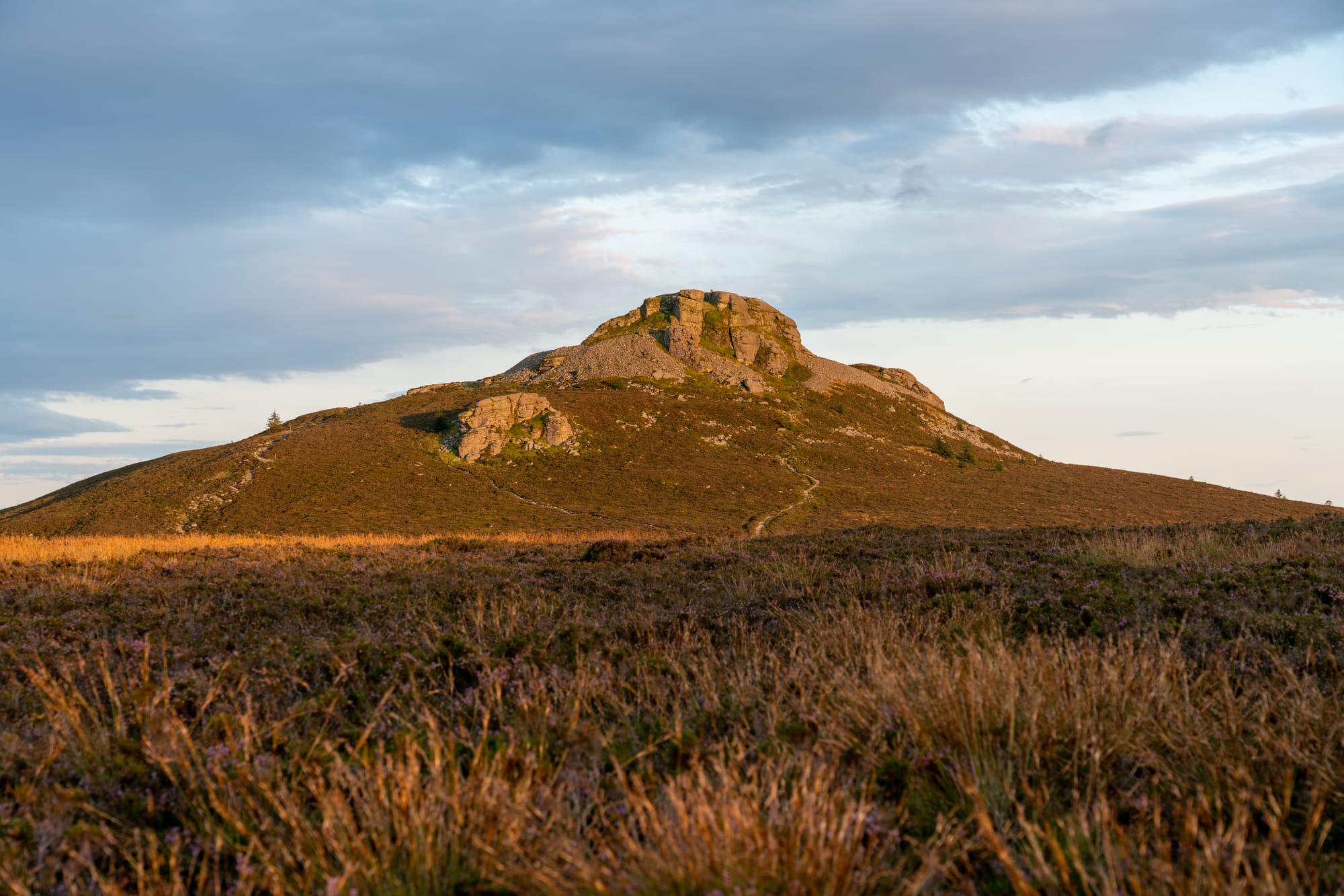
The visitor offered the maiden a bet. If he could build a path to the top of Bennachie before she had finished baking her bannocks, would she marry him then?
It was an impossible task, so to get rid of him, the maiden agreed.
Within the hour, her bannocks were almost ready and she peered out the window. To her shock, there was a gleaming new path leading up the hill, now known as the Maiden Causeway.
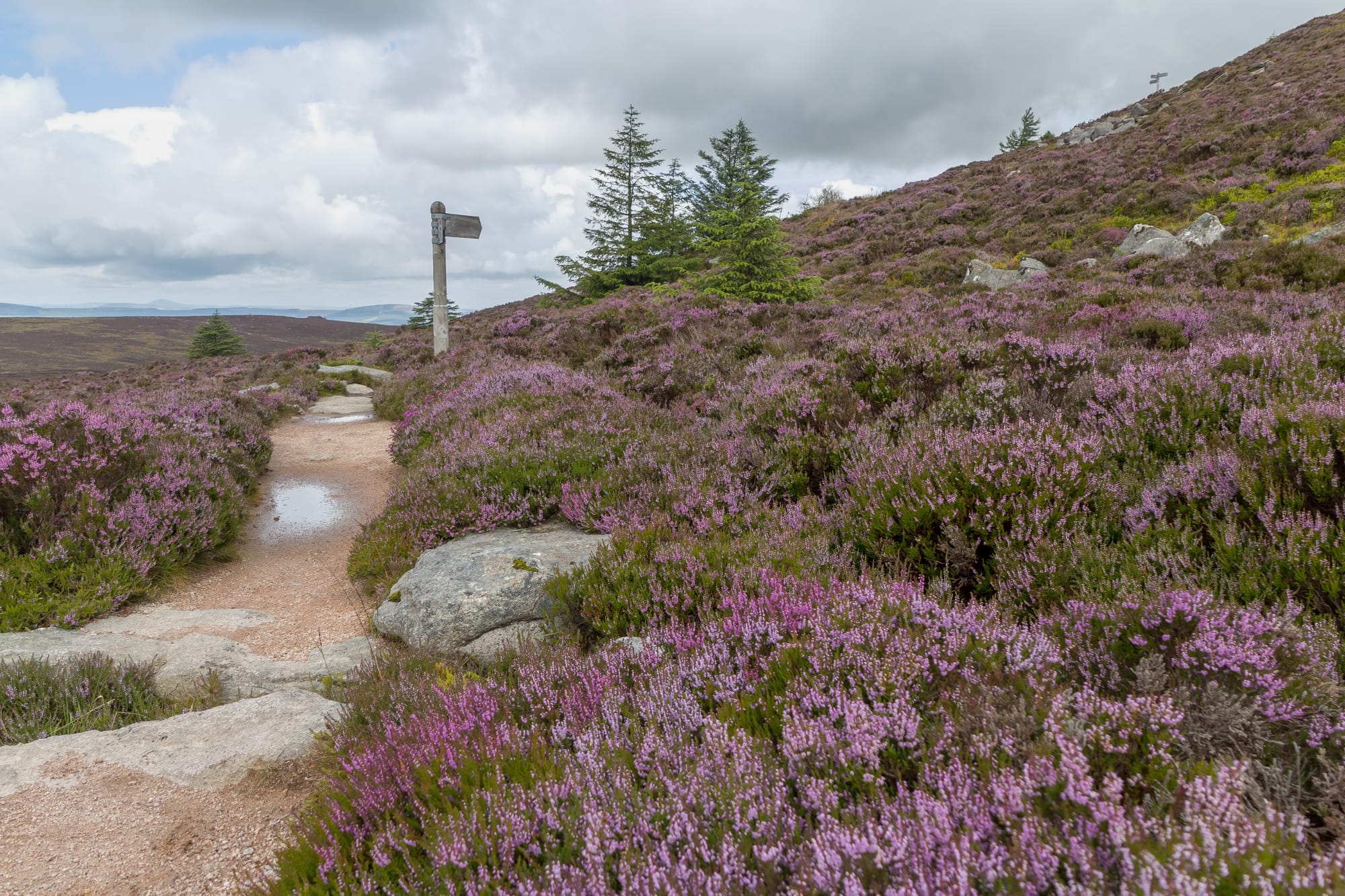
The handsome stranger was running down it and she realised too late that it was the Devil in disguise.
Sprinting out the door, the maiden could see her pursuer catching up fast. Praying with all her might, she declared she would rather turn to stone than marry the Devil!
Her prayer was answered, transforming into the Maiden Stone just as the Devil caught her shoulder, which explains the large chunk missing from the monument. She's stood there quietly ever since.
Clach na Coileach – Perthshire
The Clach na Coileach in Glenshee might just look like a large lump of rock, but it’s become a meaningful place to thousands of people around the world.
Translated as the Stone of the Cockerel, this is the meeting place of Clan MacThomas in commemoration of a former legendary chief, McComie Mòr.
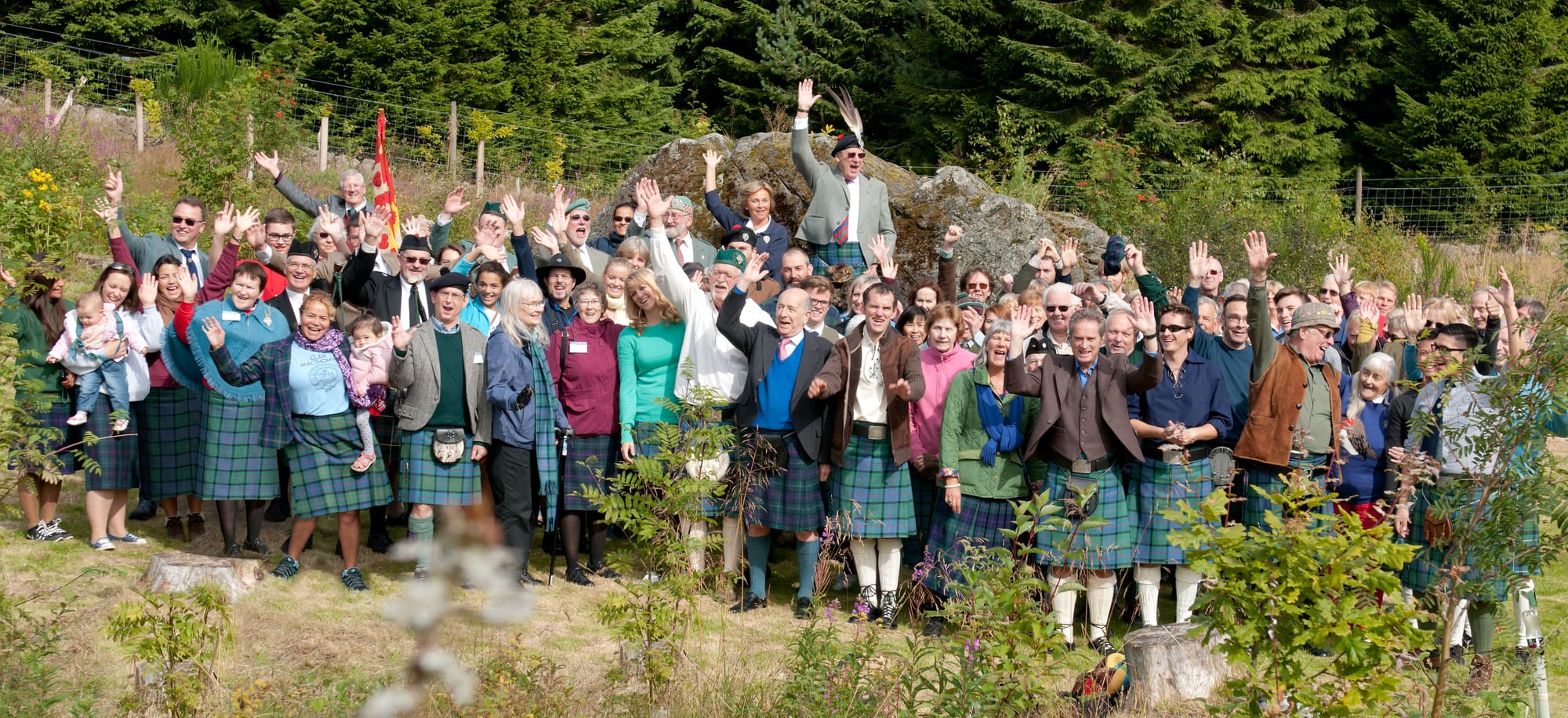
McComie lived in the 17th century, when these lands were owned by the Earl of Atholl. One day, his taxmen came to collect from an old widow.
All this lady had to keep her going through the approaching winter was a handful of hens and a single cockerel. If she handed those over, she’d struggle to see spring.
Ignoring her protests, the tax collectors took the lot.
She ran to plead with McComie Mòr. Nobody picked on his people and got away with it! It was time to deal his own form of justice and gathering a handful of men, the chief raced after the chicken thieves.
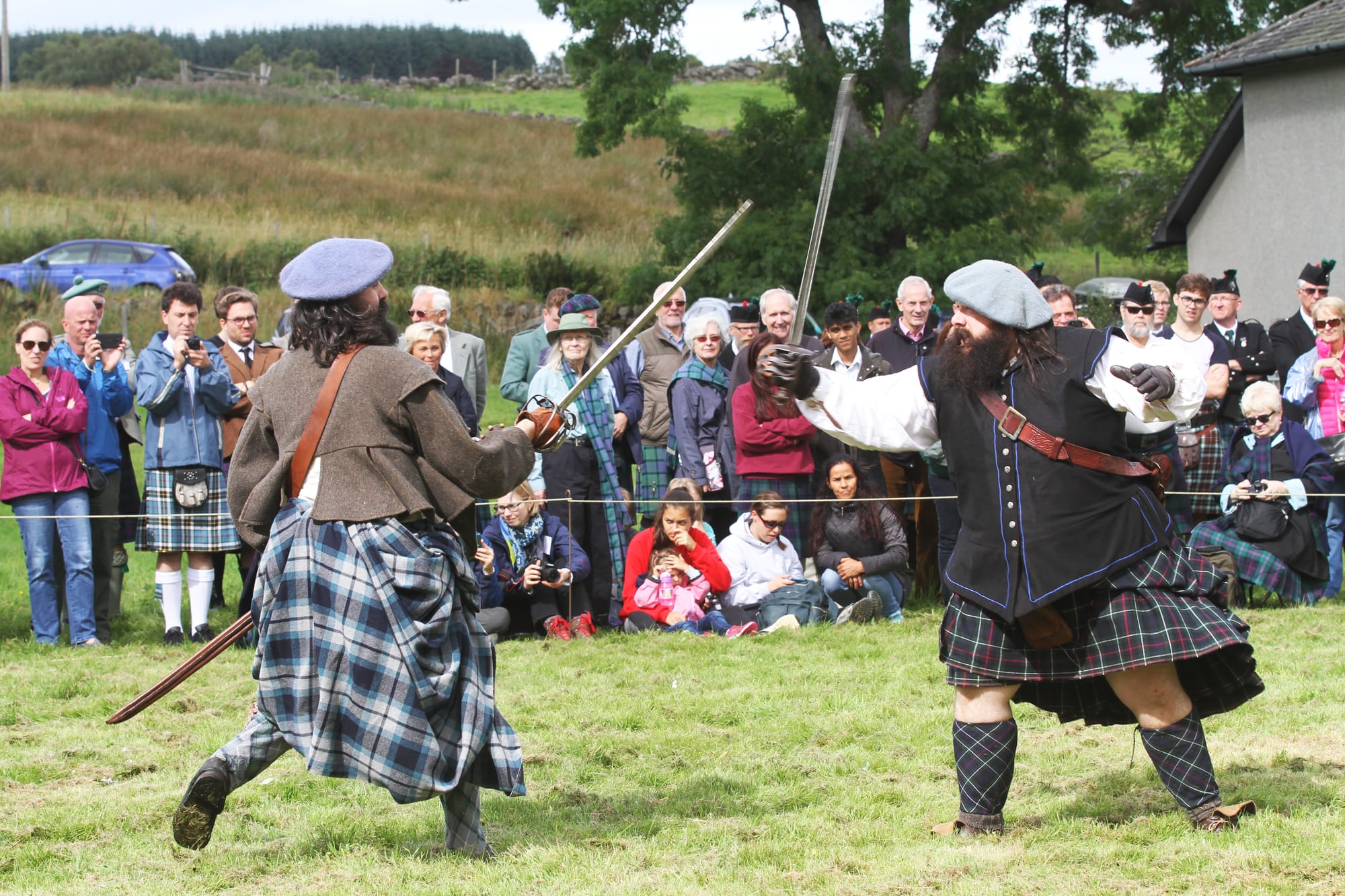
They found them resting against a large boulder and McComie gave them a chance to return what they had taken. All they did was laugh until the chief calmly drew his sword and cut the head off the closest taxman in one swift movement.
His men jumped into action and three more fell before the rest turned and ran.
The sack carrying the poultry was dropped as they tried to escape and the cockerel leapt up on to the rock, crowing loudly in celebration.
Sligachan Bridge – Skye
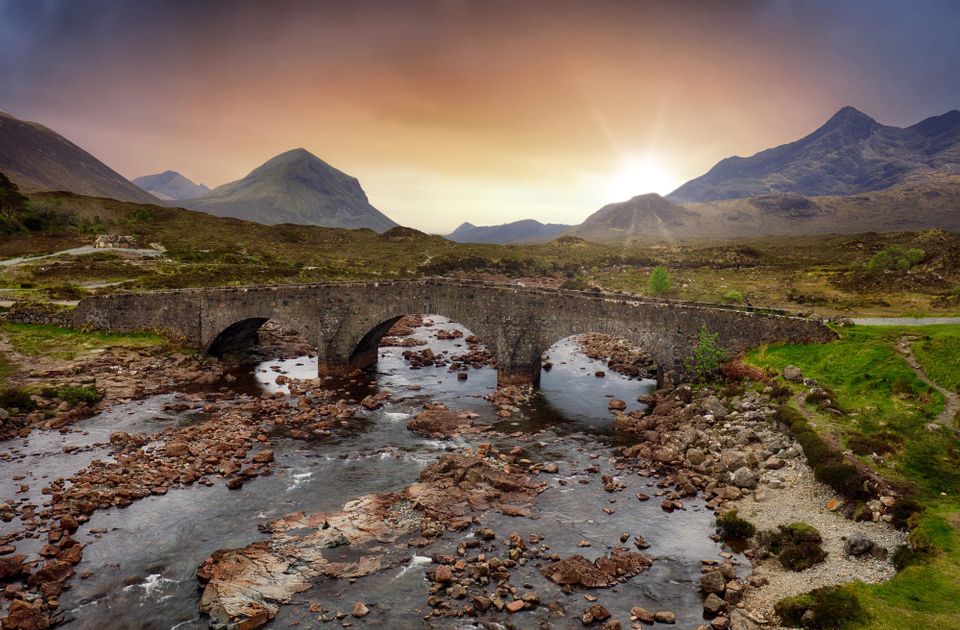
It might look like any other disused bridge to nowhere, but the Sligachan Bridge on the Isle of Skye is a magical place. More specifically, it’s the water that flows underneath that’s been enchanted by the fairies.
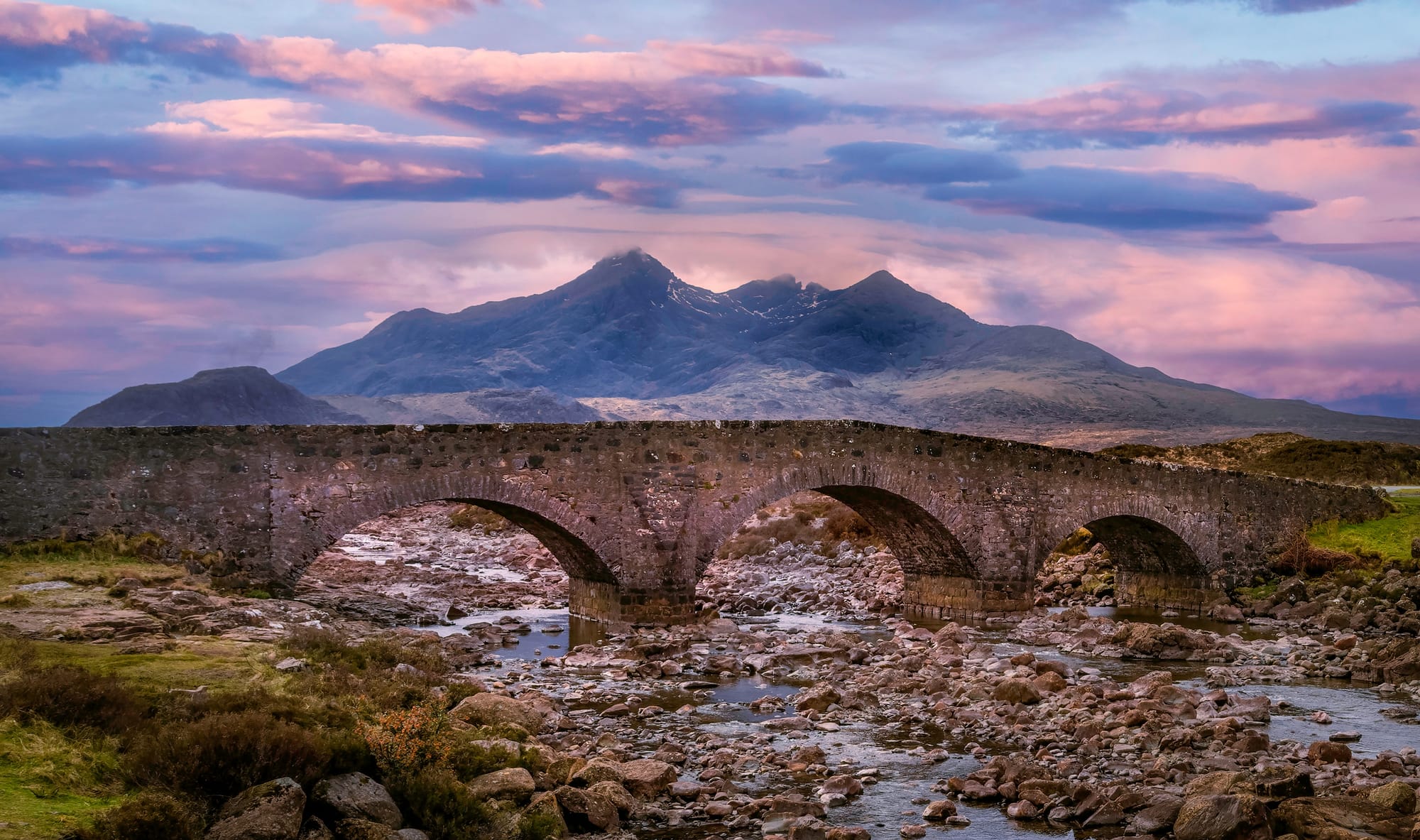
The legend starts with Scotland's greatest-ever warrior, known as Scáthach, who lived at Dunscaith Castle. Her fame had spread across the water to Cú Chulainn in Ireland, who was furious that somebody could be considered a better swordsperson than her.
The Irish demi-god challenged Scáthach to a battle to prove who was strongest once and for all.
They battled for days and it was clear they wouldn’t stop until one of them was dead. Scáthach's daughter Uathach began to worry that her mother would be killed. Her opponent was a demigod, after all!
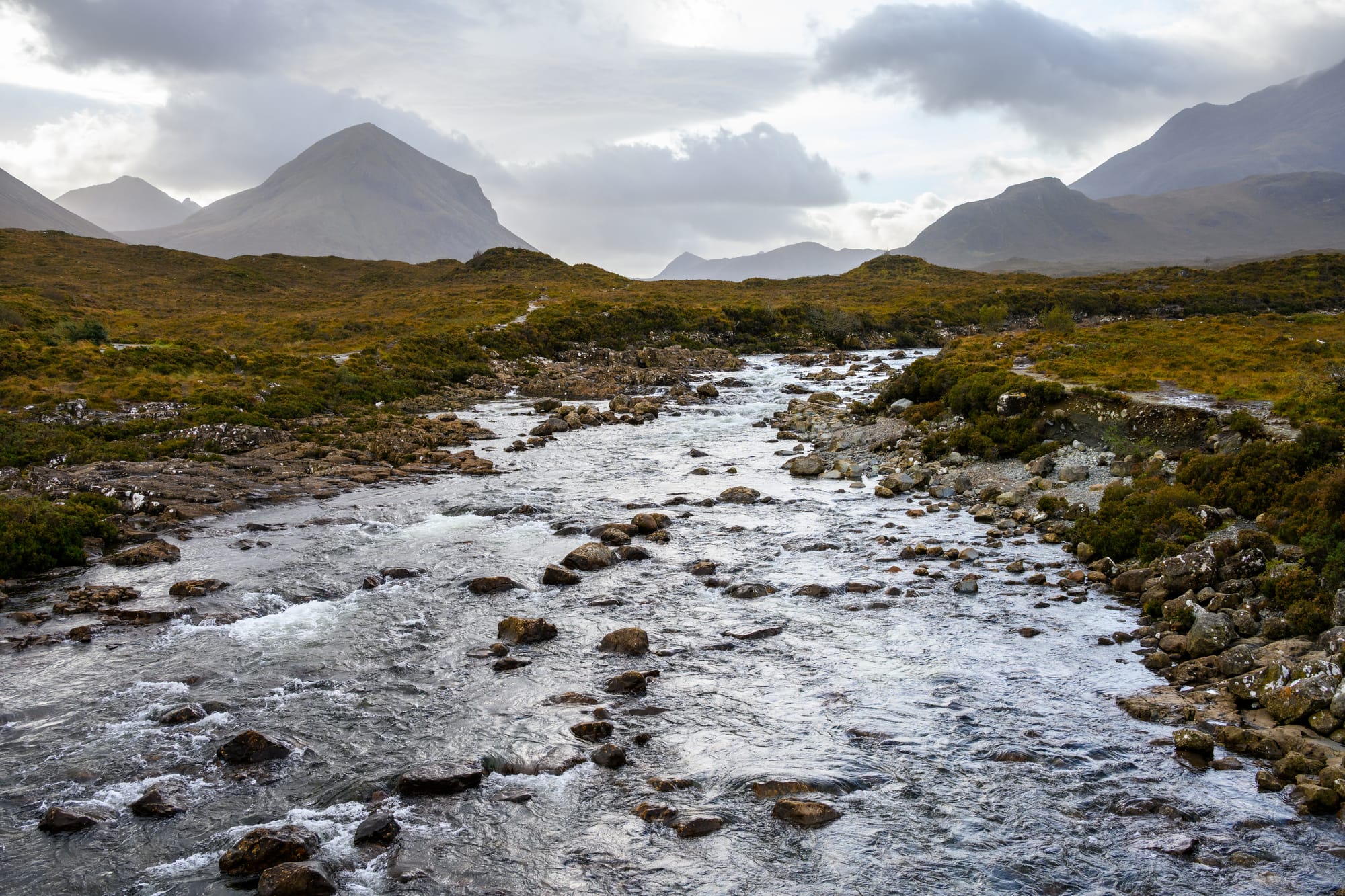
The girl came to the River Sligachan to beg the fairies of Skye for help. Uathach wept into the water as the sound of the battle raged over the island and the fairies were moved by her sorrow.
The fairy queen told her to wash her face and be blessed with the knowledge she needed to save her mother’s life.
As soon as she dipped into the water, Uathach knew what to do, and rushed back to Dunscaith to prepare a feast. Before long, a delicious smell spread to the battling warriors. Their stomachs rumbled and they dropped their weapons to seek out the food.
Agreeing to a truce, they entered the castle hall to sit down and eat together. At the same moment, they both realised that they had just broken bread together.
As a guest in Scáthach's home, Cú Chulainn couldn't fight her now out of respect and tradition. They would have to accept the battle was a draw.
It’s said that Uathach left a bit of magic in the water at Sligachan. Reach down to submerge your face completely in the water for 7 seconds, leave it to dry naturally and the fairies will grant you eternal beauty.
Cawdor Castle – Highlands
Few buildings can boast as interesting a foundation story as Cawdor Castle, built in the 14th century and still lived in by the same family today.
Before this tower was built, the Thane of Cawdor lived in another stronghold a short distance away but decided it was time to move.
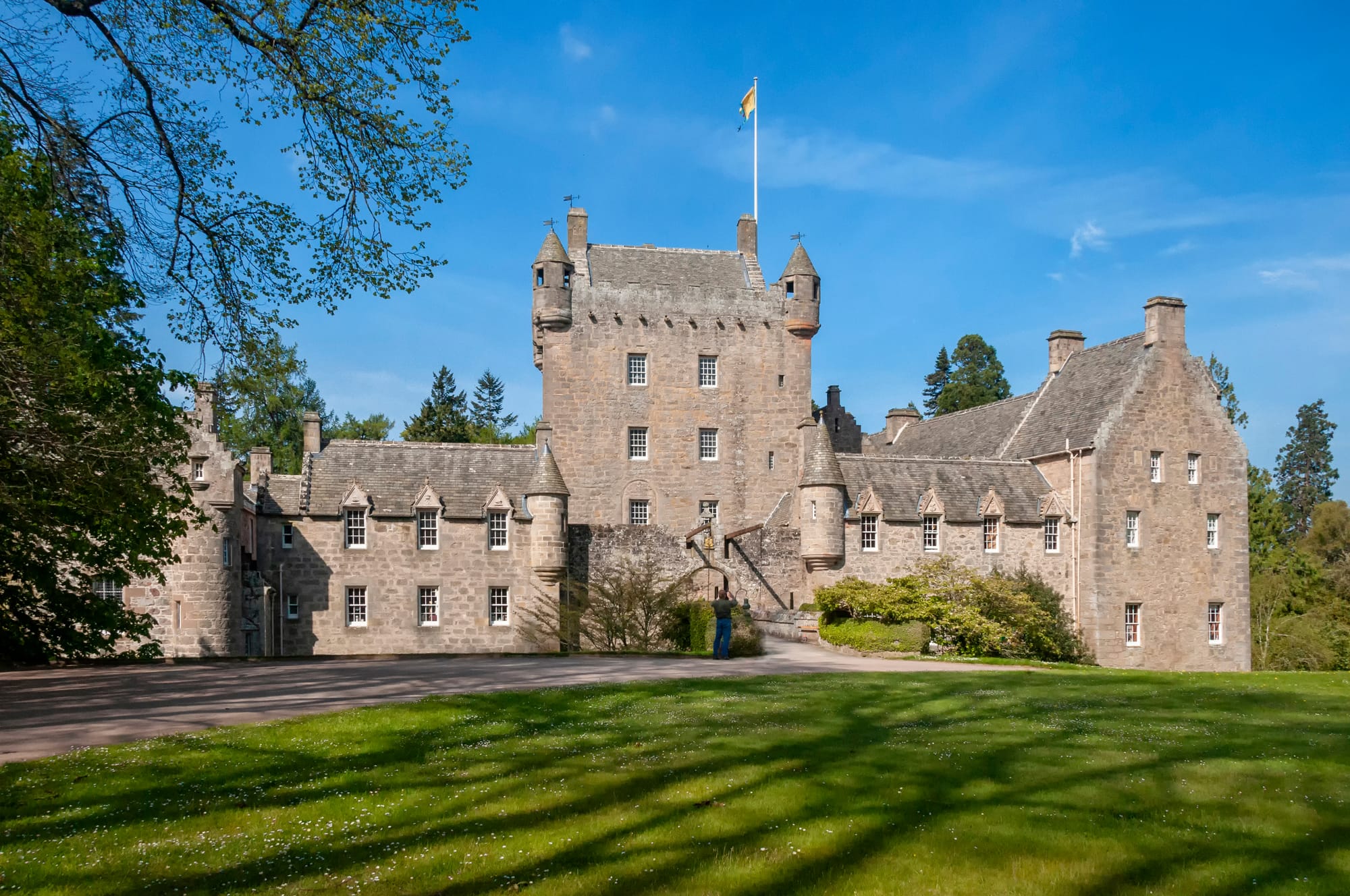
He had received permission from the King to build a new castle, he just needed to choose the location. Fortunately, the Thane of Cawdor had a dream with instructions on how to find the perfect building plot.
If he followed them exactly, then his family would forever prosper there.
People must have thought he was mad, but the Thane loaded a chest of gold on to a donkey and let it roam his land. Wherever it chose to stop, that was where he would build the new Cawdor Castle.
As the now wealthy donkey wandered, it sniffed a few different areas and finally chose to lie down for a nap under a holly tree. The Thane built Cawdor Castle right on that very spot.
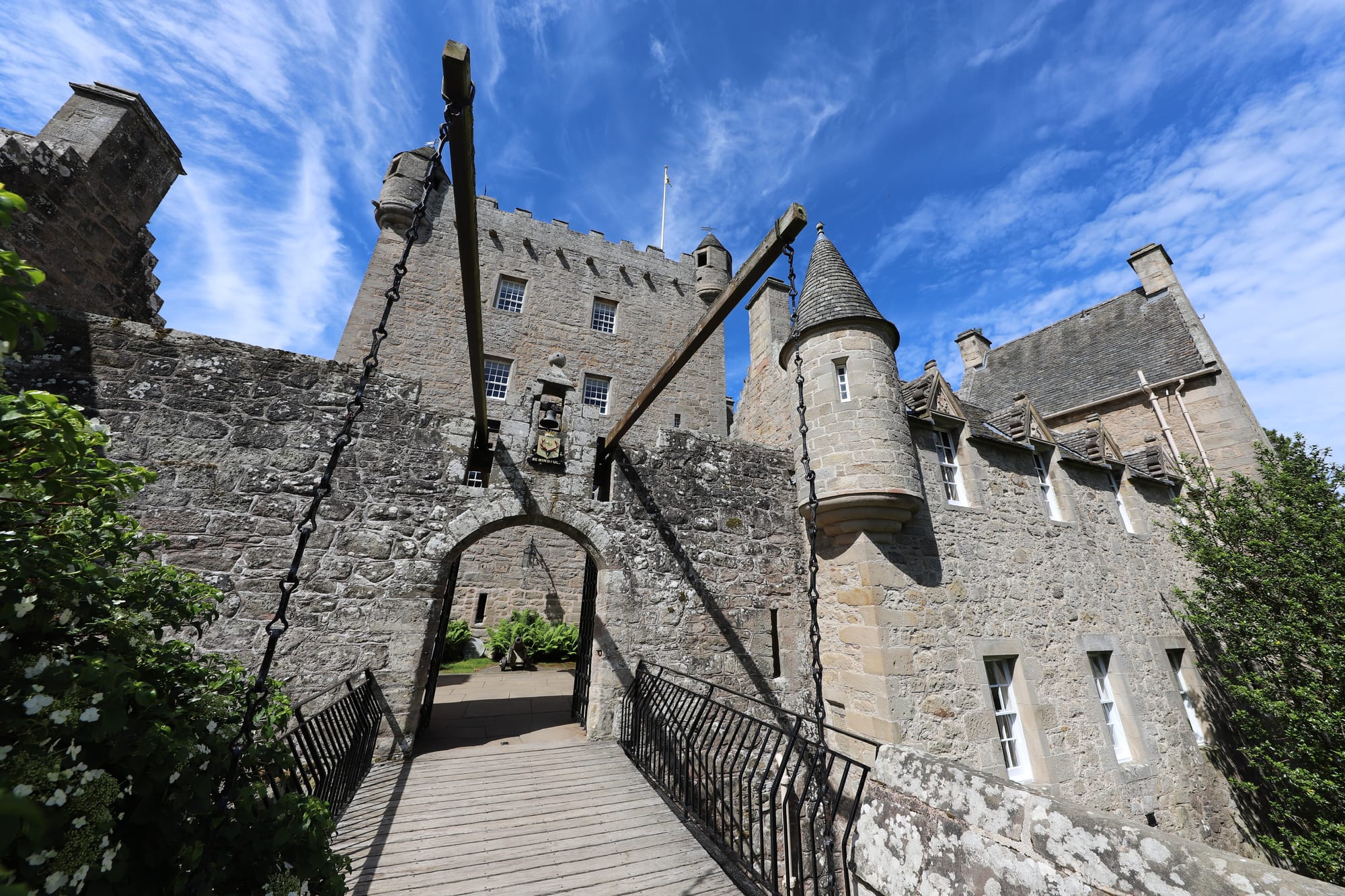
It seems a far-fetched story, but on the vaulted ground floor of Cawdor, you'll find a long-dead holly tree. It's sprouting right out of the bedrock, surrounded by 14th-century stone walls and starved of sunlight many years ago.
If that hasn’t convinced you of the legend, the tree has now been carbon-dated to have died sometime around 1372!
Love Scottish folklore? Read on...

 Rachel McConachie


Member discussion