
Blair Atholl to New York: the mystery of an 1845 piper’s prize
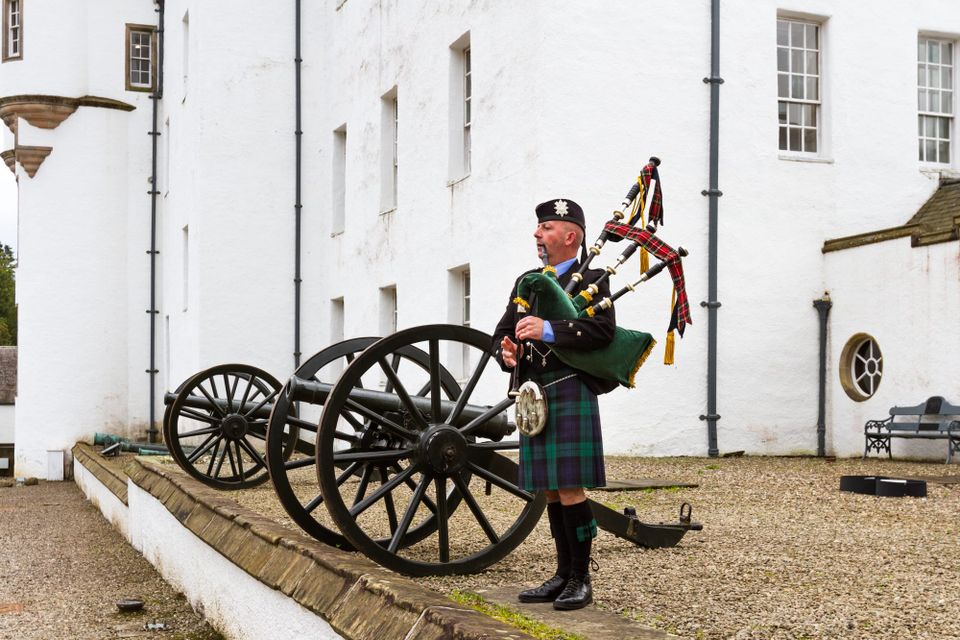
A 180-year-old Scottish family heirloom has finally given up some of its secrets after its owner in New York turned to the Royal Scottish Highland Games Association for help.
Bruce Williams contacted the RSHGA after trying to discover the story behind a silver plaid brooch which had been in his family for decades.
He was given the brooch around 40 years ago while visiting relatives in Inverness, but its origins – and the meaning behind its inscription – had remained a mystery.
An inscription from 1845
The front of the brooch is decorated with thistles and engraved with the date “1845” and the initials “D.C.H.F.S”.
On the reverse, an elegant inscription reads: “To Jas McPherson for Pibrochs”.
Williams, himself a piper, was keen to find out who McPherson was and what the initials might stand for.
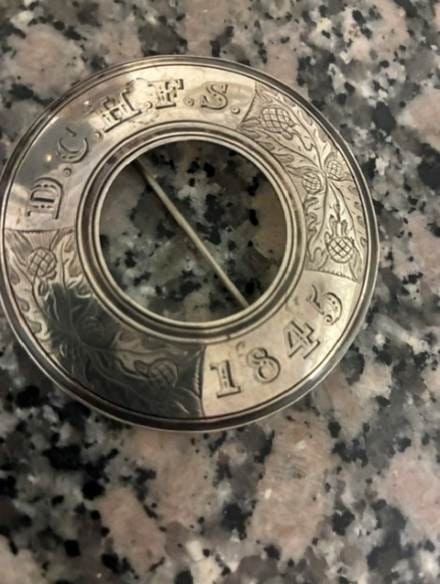
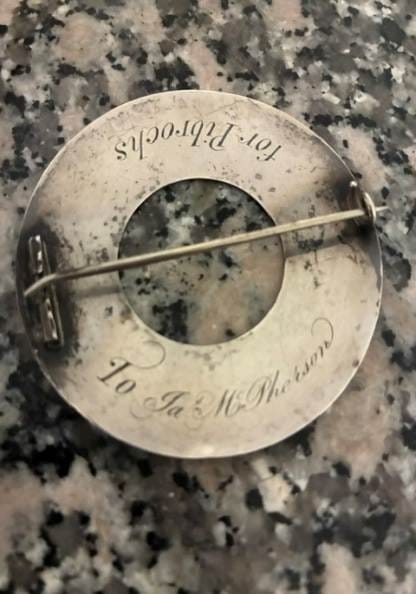
The mysterious brooch.
The answer came when Alasdair MacDonald of the RSHGA identified the awarding body as the Dunkeld Caledonian Highland Friendly Society.
Friendly societies were common in Scotland during the 18th and 19th centuries and were generally formed for the mutual benefit of their members. Some also played an important social role in their communities.
The discovery gave the RSHGA a name and a place to work with – but it was a contemporary newspaper report which provided the decisive clue.
Newspaper report provides the answer
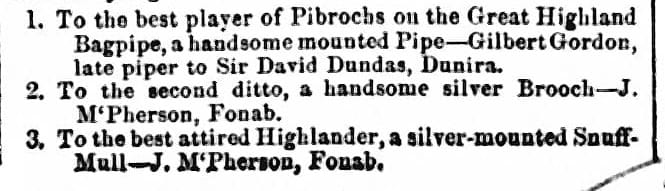
An article in the Perthshire Advertiser of July 10, 1845, reported on a meeting of the Dunkeld society and recorded that a “handsome silver Brooch” had been presented for pibroch to “J. McPherson, Fonab”.
Pibroch, also known as piobaireachd, is the classical music of the Great Highland Bagpipe. Traditionally, a piece begins with a musical theme before developing through a series of variations.
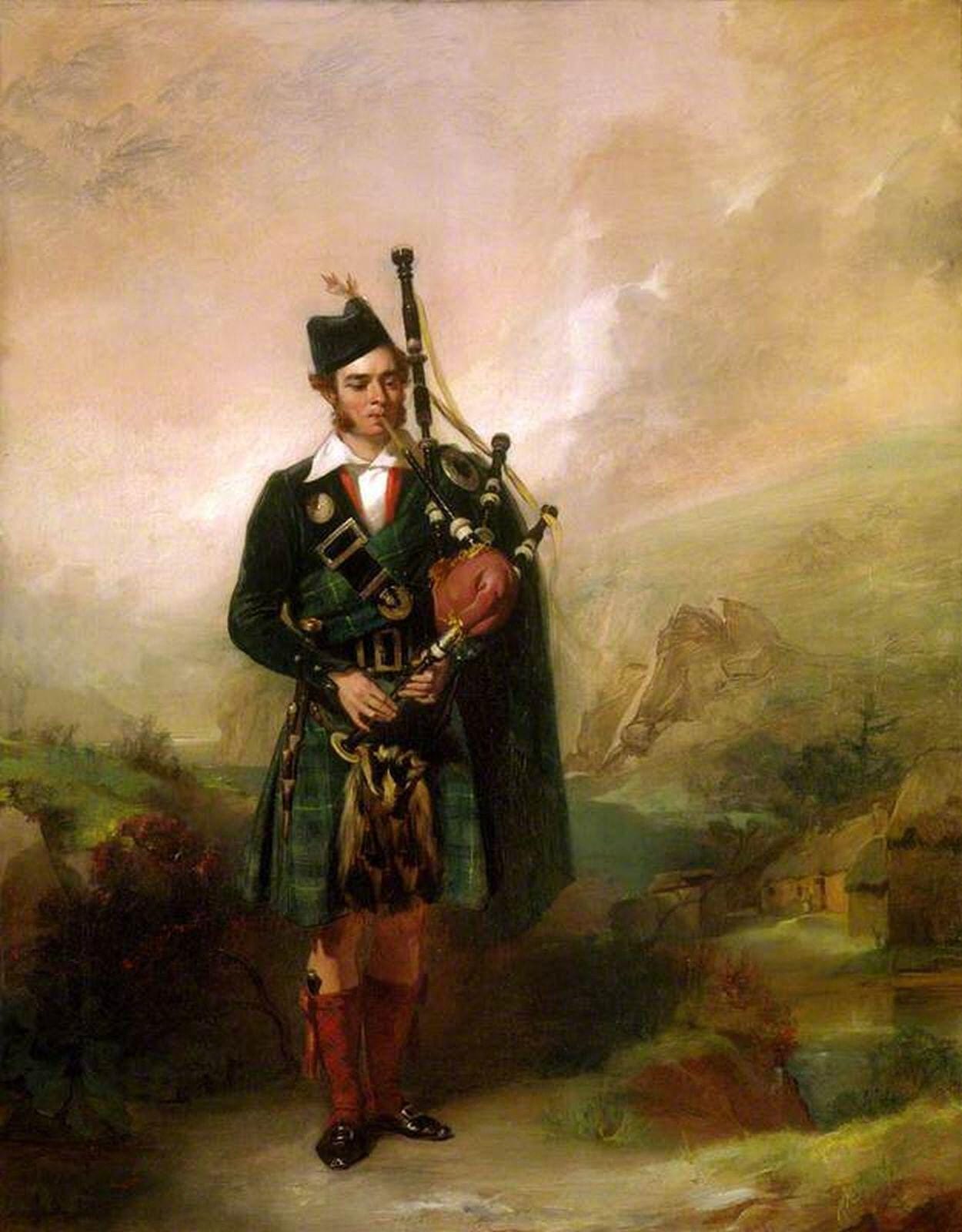
The 1845 newspaper report appears to provide a direct match for the brooch now in Williams's possession.
And McPherson did not leave the gathering with just one prize.
The report also named him the “best attired Highlander”, for which he received a “silver-mounted Snuff-Mull” — a traditional container for powdered tobacco which was often made from materials including horn, wood and silver.
Further research by the RSHGA found that James McPherson was among the pipers associated with Lord Glenlyon of Blair Atholl, and other contemporary newspaper reports record him winning further pibroch competitions.
Lord Glenlyon at the time was George Murray, who had inherited the title in 1837. Just over a year after McPherson received his brooch, Murray succeeded his uncle as the sixth Duke of Atholl.
One mystery still remains
While McPherson's silver brooch has survived for almost two centuries, the whereabouts of the silver-mounted snuff-mull he won on the same occasion remain unknown.
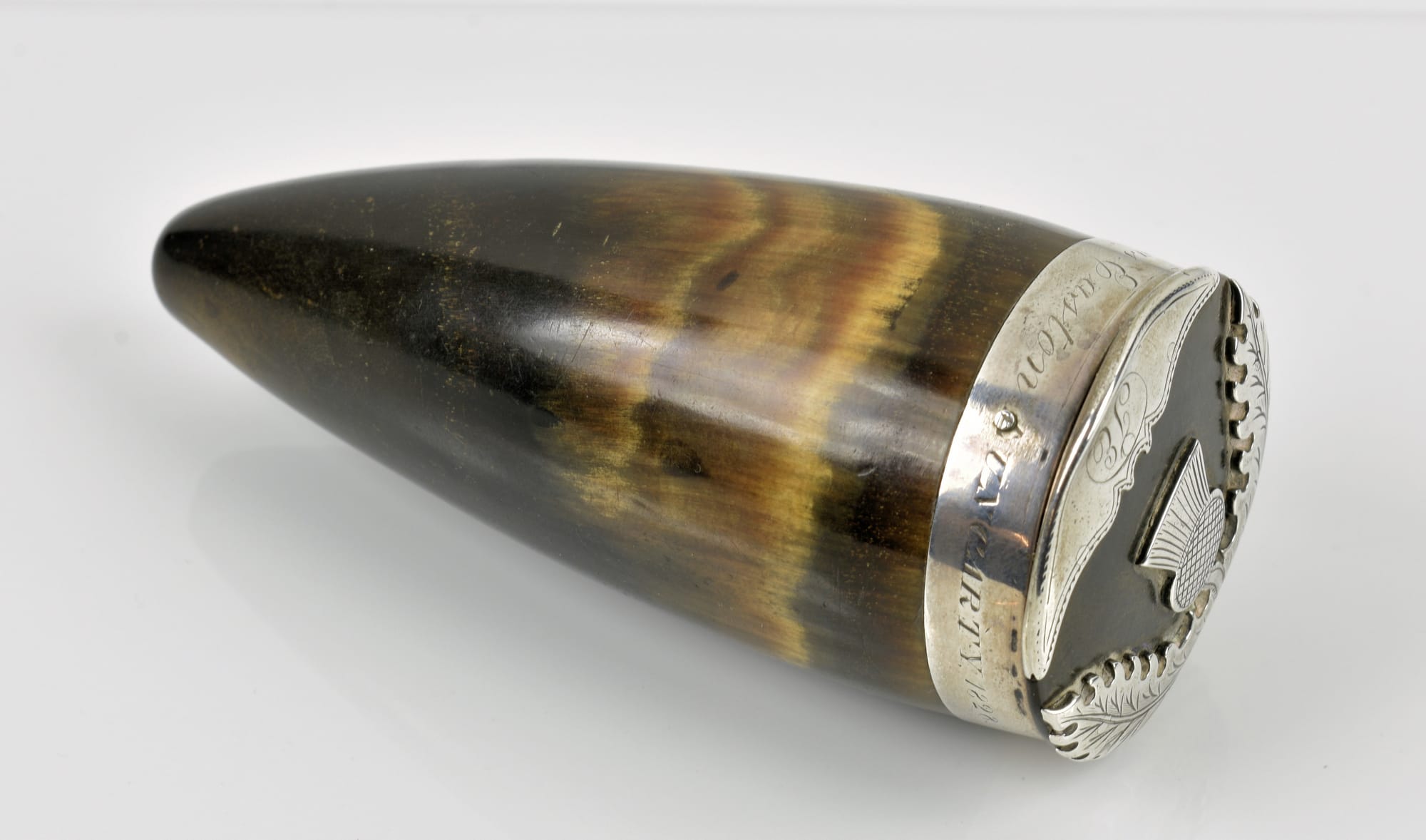
For Williams and the RSHGA, the search is now on to see whether McPherson's other 1845 prize might still be out there somewhere.


Member discussion